Decentralised finance is the most scrutinised, most technical, and most narratively complex corner of the entire blockchain ecosystem. A DeFi PR Agency is not a product — it is a financial system that users are trusting with real capital, often in a regulatory grey zone, with smart contract risk baked in by design. The communication challenge is proportionally harder than anything a standard Web3 marketing agency is built to handle.

A DeFi PR agency that understands this dynamic operates differently from a generalist crypto marketing firm. It knows how to explain liquidity mechanisms to non-technical journalists without losing technical credibility with developers. It knows how to build investor confidence before a token launch without making regulatory claims that create legal exposure. It knows how to handle a protocol exploit announcement in a way that preserves community trust rather than destroying it. And it knows which media relationships, which community channels, and which narrative angles move DeFi audiences — because DeFi audiences are not the same as the broader crypto audience.

This guide is a decision-making framework for DeFi founders and marketing teams. It covers what genuine DeFi marketing agency capability looks like, how to evaluate credibility signals and media reach, what to look for in token launch experience, the red flags that reveal agencies that are not equipped for the DeFi environment, and eight agencies worth seriously considering in 2026.

Why DeFi PR Is a Specialist Discipline 

The gap between DeFi marketing and general crypto marketing is wider than most founders initially expect. Several dynamics specific to DeFi make the communication challenge categorically different.

Technical audience segmentation: DeFi protocols serve multiple audience types simultaneously — retail users seeking yield, sophisticated traders evaluating liquidity depth, developers auditing smart contract architecture, and institutional participants assessing risk-adjusted return. Each of these audiences consumes media differently, evaluates credibility signals differently, and responds to different narrative angles. A DeFi marketing company that communicates as if these are a single homogeneous audience will miss most of them.

Protocol credibility is stake-dependent: In most industries, a brand can survive a bad media cycle. In DeFi, where users have money locked in smart contracts, a credibility crisis can trigger a bank run — a cascade of withdrawals that collapses TVL and destroys liquidity in hours. This means the cost of poor PR is not measured in brand damage alone but in direct financial loss to the protocol and its users. The stakes justify investing in DeFi PR support that understands the dynamics of how DeFi communities behave under pressure.

Regulatory communication is a continuous requirement: DeFi operates at the frontier of financial regulation in every major market. Every protocol announcement, every tokenomics disclosure, and every media statement can have regulatory implications. DeFi marketing services that do not incorporate regulatory awareness into every piece of public communication are creating liability, not value.

Token launch windows are irreversible: A DeFi token launch is a one-time event with a permanent record. A poorly managed media narrative around a launch — whether from over-hype, regulatory missteps, or poorly timed FUD — cannot be fully undone. The agencies that produce consistently strong token launch outcomes for DeFi protocols are those with documented experience managing the full communication arc from announcement through post-launch community management.

What to Look for in a DeFi PR Agency

Not all agencies that claim DeFi experience have earned it. These are the dimensions that reveal genuine DeFi marketing agency capability.

Evaluation DimensionWhat Strong Capability Looks LikeWhy It Matters
DeFi-specific media placementsNamed placements in DeFi-relevant outlets (The Defiant, Bankless, DeFi Llama content, The Block DeFi desk)DeFi media is distinct from general crypto media; placement in generalist crypto outlets is not DeFi PR
Technical narrative translationAbility to explain AMM mechanics, liquidity provisioning, tokenomics, governance, and smart contract architecture in media-ready languageTechnical inaccuracy in press materials destroys credibility with DeFi-literate audiences
Token launch portfolioDocumented outcomes from previous DeFi token launches — media coverage secured, community growth driven, TVL trajectory post-launchToken launches are high-stakes events requiring specific experience, not general PR competence
Community channel integrationPR coordinated with Discord, Telegram, governance forum communications, and Twitter/X strategyDeFi reputation is managed across on-chain and off-chain channels simultaneously
Crisis response experienceDocumented examples of managing exploit communications, regulatory questions, or FUD campaignsDeFi protocols face crisis events more frequently and more severely than most Web3 categories
Regulatory awarenessEvidence that PR copy is reviewed for regulatory compliance before distributionUnreviewed financial claims in press materials create real legal exposure
Developer audience capabilityContent and media strategy specifically for developer acquisition, not just retail user awarenessProtocol adoption in DeFi depends on developer ecosystem growth as much as user adoption

Top 8 DeFi PR Agencies in 2026

1. Eak Digital — Top Crypto and Blockchain Public Relations Services

eakdigital

Best for: Full-spectrum DeFi PR, token launches, exchange listings, and investor relations

Eak Digital has established itself as one of the most trusted names in crypto and blockchain public relations. Their team combines deep Web3 expertise with a proven media network that spans top-tier crypto publications, financial outlets, and influential content creators.

What sets Eak Digital apart:

  • Token Launch Experience: Eak Digital has handled communications for multiple DeFi token launches, crafting narratives that resonate with both retail and institutional audiences.
  • Media Reach: Strong editorial relationships with CoinDesk, Cointelegraph, Decrypt, BeInCrypto, and mainstream outlets including Forbes and Bloomberg Crypto.
  • Thought Leadership: They position founders as authoritative voices through byline articles, podcast placements, and speaking opportunities at major Web3 conferences.
  • Community Strategy: Beyond press releases, Eak Digital builds long-term community engagement strategies that fuel organic growth.
  • Crisis Management: In the volatile DeFi landscape, their team is equipped to handle negative sentiment, exploit communications, and reputation recovery.

For DeFi projects seeking explosive growth backed by credibility, Eak Digital is the benchmark.

Learn more: eakdigital.com

2. Coinbound — Best for DeFi Protocols Requiring Comprehensive Marketing Integration

Coinbound

Headquarters: New York / Remote

Specialisation: Comprehensive crypto marketing and PR including influencer marketing, community management, and paid acquisition alongside earned media.

Coinbound has built one of the most recognised DeFi marketing agency brands in the US market, with a client roster including significant DeFi and crypto projects across multiple categories. The firm’s strength is the combination of PR with influencer outreach, community management, and paid media under one roof — making it a relevant option for DeFi protocols that want a single agency managing multiple marketing channels alongside their earned media programme.

Their proprietary Coinbound Edge media data platform informs campaign strategy with Web3 media intelligence, and their track record includes documented multi-hundred press mention campaigns for major blockchain clients.

Best For: Mid-to-large DeFi protocols seeking integrated marketing including PR, influencer marketing, and community management from a single agency.

Pricing: Premium tier, $10,000–$20,000+ monthly.

3. MarketAcross — Best for DeFi Thought Leadership and Developer Audience Positioning
MarketAcross

Headquarters: Tel Aviv / Remote (global)

Specialisation: Long-form thought leadership, executive positioning, and developer-audience content strategy.

MarketAcross has built a specific capability in communicating complex DeFi and blockchain infrastructure to technical audiences — making it one of the more relevant agencies for protocols whose primary audience includes developers, technical investors, and governance participants. Their end-to-end content solutions cover strategic messaging, content creation, media relations, and distribution across 500+ publications, with documented results including a layer-1 campaign generating 45 bylined articles reaching 890,000+ views and attracting 2,300 new developers.

Best For: DeFi infrastructure protocols, developer-first projects, and brands prioritising technical thought leadership over general crypto media volume.

Pricing: $10,000–$30,000/month.

4. Luna PR — Best for DeFi Protocols Expanding into Asian and Middle Eastern Markets

Luna PR

Headquarters: Dubai / Global

Specialisation: International DeFi and crypto PR with particular strength in Middle Eastern, Asian, and emerging market media.

Luna PR provides genuinely multilingual DeFi PR capability across Arabic, Mandarin, Japanese, Korean, and 10+ other languages — making it the strongest option for DeFi protocols whose user and investor base spans multiple linguistic markets. The firm specialises in coordinating simultaneous multi-market PR campaigns and has established relationships with Bloomberg Middle East, CNBC Arabia, and major Asian crypto publications that most Western DeFi marketing companies cannot access.

Best For: DeFi protocols with global user bases requiring simultaneous multi-market media campaigns, and projects entering Asian or Middle Eastern markets.

Pricing: $8,000–$25,000+ monthly depending on geographic scope.

5. Melrose PR — Best for DeFi Infrastructure and Institutional Communication

Melrose-pr

Headquarters: Los Angeles / Remote

Specialisation: Institutional-grade DeFi communications, infrastructure project messaging, and founder credibility building.

Founded in 2012, Melrose PR brings disciplined institutional communications expertise to DeFi protocol PR — particularly for infrastructure and tooling projects whose audiences are developers, institutional liquidity providers, and protocol governance participants rather than retail users. Their emphasis on message consistency, journalist relationship quality over placement volume, and serious founder positioning makes them a strong fit for DeFi protocols that need to build credibility with sophisticated audiences before pursuing broader retail awareness.

Best For: DeFi infrastructure and tooling protocols, protocols targeting institutional liquidity, and founders building personal authority in the developer and institutional DeFi communities.

Pricing: $12,000–$30,000+ monthly.

6. Wachsman — Best for Established DeFi Protocols Requiring Mainstream Financial Media Access

blank

Headquarters: New York / Dublin / Singapore

Specialisation: Enterprise-grade blockchain PR with strong mainstream financial media relationships.

Wachsman is one of the longest-established DeFi marketing company and blockchain PR firms, with documented relationships across both crypto-native and mainstream financial media including Bloomberg, Reuters, the Financial Times, and the Wall Street Journal. For established DeFi protocols that need to reach institutional investors, traditional finance journalists, and regulatory audiences — not just crypto-native media — Wachsman’s hybrid media network is genuinely differentiated.

Best For: Established DeFi protocols seeking institutional credibility through mainstream financial media, protocols navigating regulatory communications, and brands preparing for institutional capital raises.

Pricing: Enterprise-tier, typically $15,000–$40,000+ monthly.

7. FleishmanHillard — Best for DeFi Protocols Requiring Enterprise-Scale Global PR Infrastructure

blank

Headquarters: St. Louis / 80+ global offices

Specialisation: Enterprise PR with emerging technology and financial services focus.

FleishmanHillard is not a pure DeFi PR agency — it is a full-scale global enterprise PR firm with a dedicated digital assets and blockchain practice. For DeFi protocols of sufficient scale that need enterprise PR infrastructure across multiple markets simultaneously, FleishmanHillard’s global network provides coverage that specialist crypto agencies cannot match in breadth. The trade-off is depth of crypto-native media relationships versus breadth of global PR infrastructure.

Best For: Large-scale DeFi protocols requiring enterprise-grade global PR across mainstream, financial, and regulatory media simultaneously.

Pricing: Enterprise-tier, project and retainer based.

8. NinjaPromo — Best for Early-Stage DeFi Projects Requiring Accessible Full-Stack Marketing
NinjaPromo

Headquarters: New York / London / Dubai

Specialisation: Full-stack crypto and DeFi marketing including PR, paid media, social media, and community management.

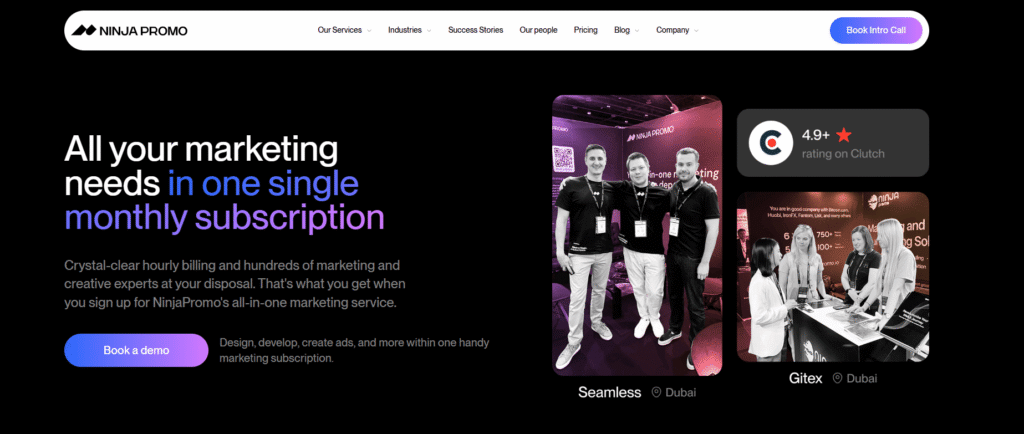
NinjaPromo serves early-to-mid stage DeFi projects with a broad service stack at more accessible price points than premium-tier agencies. Their coverage of paid media, social media, influencer marketing, PR, SEO, and community management under one roof makes them a practical option for DeFi protocols that need multiple marketing functions activated simultaneously with a constrained budget.

Best For: Early-stage DeFi projects, DeFi protocols requiring multi-channel marketing at accessible price points, and protocols that want PR as part of a broader full-stack marketing programme.

Pricing: Monthly retainer from approximately $3,000.

Quick Comparison: Top 8 DeFi PR Agencies at a Glance

AgencyBest ForKey StrengthPricing Tier
Eak DigitalDeFi protocol PR + integrated marketingEakwire distribution, global offices, tier-1 portfolio, full-stack integrationProject + retainer
CoinboundComprehensive DeFi marketing + PRInfluencer + PR + community under one roof$10K–$20K+/month
MarketAcrossTechnical thought leadershipDeveloper-audience content, 500+ publication network$10K–$30K/month
Luna PRMulti-market international DeFi PRMultilingual, Middle East + Asia expertise$8K–$25K+/month
Melrose PRInfrastructure and institutional credibilityMessage discipline, institutional journalist relationships$12K–$30K+/month
WachsmanMainstream financial media accessBloomberg, Reuters, FT relationships$15K–$40K+/month
FleishmanHillardEnterprise-scale global PR infrastructure80+ office global networkEnterprise-tier
NinjaPromoEarly-stage accessible full-stack marketingBroad service stack, lower entry pricingFrom $3K/month

How to Choose the Right DeFi PR Agency: 7 Credibility Signals

Selecting a DeFi marketing agency is a high-stakes decision. Here’s what to evaluate before signing any contract.

1. Verified Media Relationships

Ask for specific journalist contacts and publication lists — not just logos on a website. A credible DeFi PR agency can name editors at CoinDesk, Cointelegraph, or Decrypt and show past placements with live links.

2. Token Launch Portfolio

Has the agency run communications for a live token launch? Token events require highly specialized messaging — compliant, compelling, and timed precisely. Look for case studies with verifiable results (price performance, community growth, media coverage volume).

3. Crypto-Native Team Members

The best DeFi marketing companies are staffed by people who actively use DeFi protocols, follow on-chain data, and understand the culture. Ask who will actually be working on your account.

4. Community Management Depth

PR doesn’t stop at publications. Strong DeFi marketing services include Discord moderation, Telegram engagement, X (Twitter) amplification, and AMA management. A firm that only pitches press releases is leaving major value on the table.

5. Transparent Reporting

Reputable agencies provide clear KPI dashboards: earned media value, domain authority of placements, share of voice, follower growth, Discord/Telegram member metrics. Vague monthly reports are a red flag.

6. Crisis Communication Experience

DeFi is volatile. Hacks, rugs, governance attacks, and regulatory news can emerge without warning. Ask directly: “Walk me through how you handled a project crisis.” Their answer will tell you everything.

7. Regulatory Awareness

A good DeFi PR agency knows what you can and cannot say about a token without triggering securities concerns. If they’ve never mentioned regulatory communication guidelines, walk away.

Red Flags to Avoid When Hiring a DeFi PR Agency

Not every agency claiming “crypto expertise” deserves your budget. Avoid partners who exhibit these warning signs:

  • Guaranteed media placements in exchange for payment — ethical PR earns coverage; it doesn’t buy it (or at least not without clear disclosure)
  • No verifiable case studies — testimonials without links or metrics are worthless
  • One-size-fits-all packages — DeFi PR is not a commodity; your project’s stage, audience, and goals require a customized approach
  • No on-chain awareness — if they can’t read a Dune Analytics dashboard or discuss TVL trends, they don’t understand the space
  • Overpromising token price impact — any agency that links PR directly to token price is making promises that cross both ethical and legal lines
  • Slow response times — in crypto, 24 hours might as well be a week; your agency needs to move fast
  • No mention of community — DeFi lives and dies by its community; an agency ignoring this channel is missing the bigger picture

DeFi PR vs. DeFi Marketing: Understanding the Difference

Many founders conflate PR and marketing. Here’s a quick breakdown:

DeFi PRDeFi Marketing
GoalBuild credibility and earned mediaDrive traffic, users, and conversions
ChannelsJournalists, podcasts, publicationsPaid ads, SEO, influencers, social
MeasurementMedia mentions, share of voice, reputationCAC, TVL growth, wallet signups
TimelineLong-term brand buildingShort to mid-term campaign cycles

The most effective strategies combine both. A strong DeFi marketing company will integrate PR and performance marketing into one cohesive growth engine.

What to Expect from a DeFi PR Agency Engagement

A professional engagement with a top DeFi PR agency typically includes:

Month 1 — Foundation

  • Brand narrative and messaging framework development
  • Competitive media audit
  • Media list building and journalist relationship mapping
  • Press kit creation (founder bios, project one-pager, high-res assets)

Month 2–3 — Launch Phase

  • Press release drafting and distribution
  • Feature article pitching to tier-1 crypto publications
  • Podcast and AMA scheduling
  • Community PR cadence (Discord AMAs, X Spaces)

Month 4+ — Sustained Growth

  • Ongoing media relations
  • Thought leadership content (op-eds, bylines)
  • Conference speaking submissions
  • Monthly reporting and strategy refinement

How to Run Your Agency Evaluation Process 

Once you have a shortlist, a structured evaluation process produces better outcomes than gut instinct alone.

Request DeFi-specific case studies with quantified outcomes: The relevant metrics are not press release counts — they are TVL trajectory post-launch correlated with PR activity, developer acquisition driven by thought leadership campaigns, community growth rates during key announcement periods, and token holder sentiment through market events. An agency that cannot provide DeFi-specific case studies with these metrics is not demonstrating DeFi marketing services capability — it is demonstrating general crypto marketing capability applied to DeFi contexts.

Run a scenario exercise: Give every shortlisted agency the same hypothetical: “Our protocol experienced an oracle manipulation that drained $4M from a liquidity pool at 2am UTC. Walk us through your crisis response.” The answers reveal crisis management maturity — how fast they move, who takes ownership, how they coordinate across press and community channels simultaneously, and whether their first instinct is transparency or containment.

Assess technical comprehension directly: Provide a one-page technical overview of your protocol and ask the agency team to explain it back to you as they would explain it to a journalist at The Block. Technical inaccuracies or oversimplifications in this exercise indicate that your technical narrative will be misrepresented in press materials.

Verify the media contacts they actually have: Ask them to name three journalists who cover DeFi at tier-one publications and describe their recent coverage. Genuine media relationships produce specific, current answers. Database access produces vague answers about general publication lists.

Check their reporting framework before signing: The monthly reports you receive should include domain authority metrics from placements, share of voice tracking against named DeFi competitors, on-chain metric correlation with PR activity where measurable, and community sentiment trend data — not just a PDF of press clipping screenshots.

Conclusion

The DeFi PR agency market in 2026 contains agencies with genuinely deep DeFi communication expertise and agencies that have translated general crypto marketing capability into DeFi-adjacent positioning. The gap in outcomes between the two categories is significant — particularly for token launches, crisis events, and developer audience campaigns where the specific dynamics of DeFi communication make general crypto PR approaches insufficient.

The eight agencies in this guide represent the strongest options across different DeFi protocol contexts and budget levels. Eak Digital leads for protocols requiring integrated DeFi PR with global reach, proprietary distribution infrastructure, and full-stack marketing coordination. The others cover distinct specialisations — thought leadership depth, international reach, institutional credibility, enterprise scale, and accessible entry pricing for earlier-stage projects.

The right DeFi marketing agency for your protocol is the one whose specific strengths align with your specific communication challenges, your token launch timeline, your audience profile, and your growth stage. The evaluation framework in this guide gives you the criteria to make that match confidently — and the red flag signals to avoid the agencies that would cost you more than the retainer.

Related Reading

Frequently Asked Questions

What is a DeFi PR agency?

A DeFi PR agency is a specialist communications firm that manages earned media, narrative strategy, token launch communications, crisis response, and community-integrated PR for decentralised finance protocols. It differs from a general crypto PR agency in its technical understanding of DeFi mechanics, its relationships with DeFi-specific media, and its experience managing the specific communication dynamics of liquidity protocols, governance systems, and token economies.

Why does DeFi need specialist PR rather than general crypto PR? 

DeFi audiences are more technically sophisticated, more sceptical of marketing language, and more directly exposed to financial risk than the broader crypto audience. DeFi communication requires technical accuracy in press materials, on-chain data literacy, developer audience capability, and crisis response experience specific to smart contract exploits and governance events — none of which general crypto PR firms reliably possess.

What DeFi marketing services should an agency provide? 

A comprehensive DeFi marketing agency should provide token launch media campaigns, protocol narrative strategy, on-chain data-informed press materials, governance communication, community-integrated PR coordination, crisis response capability, regulatory-aware messaging, thought leadership positioning, and developer audience outreach — not just press release distribution.

How much does a DeFi PR agency cost? 

Costs vary significantly by agency tier and scope. Entry-level packages start around $3,000–$8,000/month for basic distribution and limited outreach. Full-service mid-tier packages with tier-one media targeting run $10,000–$20,000/month. Premium enterprise-grade DeFi PR ranges from $20,000 to $40,000+/month. Project-based pricing for token launches varies by campaign scale.

When should a DeFi protocol engage a PR agency? 

Ideally 3–6 months before any major milestone — token launch, protocol upgrade, fundraising announcement, or exchange listing. This lead time allows the agency to build journalist relationships, establish foundational media coverage, and develop narrative infrastructure before the critical announcement window. Engaging PR support two weeks before a token launch is the most common and most expensive mistake DeFi founders make.

What are the biggest red flags when evaluating a DeFi marketing company? 

Key red flags include inability to explain your protocol’s mechanics accurately, all placements being wire-distributed rather than earned editorial, inability to name specific DeFi journalists by beat, vague crisis management experience without DeFi-specific examples, guarantees of specific editorial placements, and no on-chain data literacy in press materials.

Does Eak Digital specialise in DeFi PR?

Yes. Eak Digital provides DeFi PR and integrated blockchain marketing for tier-one protocols and DeFi brands globally. Services include token launch media campaigns, Eakwire-powered press distribution to 200+ publications, on-chain data-informed press materials, crisis communications, KOL outreach, community management, and SEO-integrated PR — coordinated as a single campaign rather than siloed tactics.
DeFi is one of the most technically sophisticated and marketing-hostile environments in digital business. You can have audited smart contracts, innovative tokenomics, and a genuinely novel liquidity mechanism — and still watch your TVL stagnate at zero because nobody qualified has heard of you.

The challenge is not just reach. It is trust, timing, and technical credibility — communicated simultaneously to liquidity providers, developers, retail users, and institutional participants who each need a different message and a different channel. Generic digital marketing agencies are structurally incapable of doing this. A specialist DeFi marketing agency built on crypto-native experience is the only viable option.

This guide ranks the top 10 best DeFi marketing agencies in 2026, evaluated on real performance metrics — user acquisition results, TVL growth contributions, community engagement quality, and DeFi PR track records — rather than homepage claims and client logo carousels.

Why DeFi Marketing Is Different

Before the rankings, it is worth establishing exactly why DeFi marketing requires a specialist agency — because the gap between general Web3 marketing and genuine DeFi expertise is wider than most founders realise when they start evaluating agencies.

The audience is technically sophisticated and deeply sceptical. Liquidity providers, developers, and governance participants are not passive consumers. They read smart contract audits, track on-chain activity, and identify inflated follower counts and coordinated shill campaigns within hours. Marketing that speaks to this audience must be technically accurate, substantively credible, and delivered through channels they trust — or it actively damages the project’s reputation.

The growth metrics are protocol-specific. For most businesses, user acquisition and revenue are the primary marketing KPIs. In DeFi, the metrics that matter are Total Value Locked (TVL), unique wallet interactions, governance participation, liquidity depth, and token holder quality. An agency that cannot speak fluently to these metrics is not equipped to design campaigns that move them.

Community is both product and distribution. An empty Discord or a low-engagement Telegram group is a visible red flag to potential liquidity providers and investors. The DeFi marketing services that produce lasting results are those that build genuine, technically engaged communities — not those that inflate member counts with bot activity.

DeFi PR operates in a specialised media environment. The publications, journalists, and influencers who carry weight with DeFi audiences — DeFi-specialist outlets, protocol analyst accounts, respected researchers — are different from the general crypto media landscape. DeFi PR that lands in the right places with the right framing is a meaningful growth lever. PR placed in the wrong publications is budget wasted.

Why Most DeFi Projects Fail at Marketing (And What the Best Agencies Fix)

You’ve built a solid protocol. The smart contracts are audited. The tokenomics are clean. The UI is smoother than anything on mainnet right now.

And still — crickets.

This is the most common story in DeFi in 2026. Projects with genuine innovation but no traction, because marketing in decentralized finance operates by completely different rules than traditional Web2 or even centralized crypto.

Here’s what actually goes wrong:

  • Ghost communities — Discord and Telegram channels with 10,000 members and 3 daily messages. Bots or dead wallets. Investors notice.
  • Wasted ad budgets — Running generic paid campaigns without understanding DeFi’s unique user funnel. High CAC, zero retention.
  • Broken token distribution — Tokens dumped by early participants. No staking incentive loop. Governance participation near zero.
  • Zero credibility layer — No coverage in Cointelegraph, Decrypt, or The Block. No respected KOLs vouching for the protocol.
  • One-and-done on-chain behavior — Users interact once, never return. TVL flatlines. The protocol looks abandoned.

The difference between projects that survive and those that don’t often comes down to the defi marketing agency they choose, or whether they choose one at all.

This guide cuts through the noise. We analyzed case studies, dug through founder forums, and tracked real metrics across dozens of agencies. What follows is a data-grounded ranking of the best DeFi marketing agencies in 2026.

How We Ranked These Agencies

We didn’t rely on paid placements or agency self-reporting. Our ranking methodology was built around:

CriteriaWhat We Measured
DeFi-native experienceTVL campaigns, token launches, liquidity growth
Verifiable performance dataCAC reduction, user acquisition numbers, community growth rates
Service breadthCan they handle PR, influencer, community, and paid all in one place?
Reputation signalsClutch reviews, Telegram founder groups, Twitter reputation
Portfolio qualityRecognizable protocols, not just logos on a slide

If an agency couldn’t produce real DeFi case studies with actual numbers, it didn’t make this list.

Top 10 DeFi Marketing Agencies in 2026 — Quick Comparison

RankAgencyBest ForKey Strength
1Eak DigitalCrypto & Blockchain PRTier-1 media + narrative building
2ChainLeadsPerformance-first DeFi growthROI-tracked user acquisition
3CoinbandWeb3 startupsBudget-friendly community growth
4TokenMindsFull-stack DeFiDev + marketing alignment
5ICODACross-border campaignsEast/West market bridges
6BlockwizData-driven strategyReal metrics, no vanity numbers
7CoinboundInfluencer marketingKOL network & social amplification
8Single GrainEnterprise Web3Full-funnel institutional campaigns
9GuerillaBuzzOrganic PR & SEOLong-term brand credibility
10Lunar StrategyViral & creative campaignsGen Z / NFT / GameFi audiences

The Top 10 DeFi Marketing Agencies — Full Reviews

1. Eak Digital — Top Crypto and Blockchain Public Relations Services

eakdigital

Best For: DeFi protocols, blockchain startups, and token projects that need credibility, press coverage, and a narrative that sticks
Core DeFi Marketing Services: Blockchain PR, crypto media placements, thought leadership, exchange listing PR, token launch communications, influencer outreach, community strategy

When it comes to DeFi PR, Eak Digital sits in a category of its own. While many agencies focus on community numbers and paid funnels, Eak Digital builds the credibility layer that makes everything else work — because even the best community manager can’t overcome a project that nobody in the press has written about.

What makes Eak Digital different:

Eak Digital specializes in blockchain and crypto public relations with a track record of placing clients in Tier-1 publications including CoinDesk, Cointelegraph, Decrypt, The Block, BeInCrypto, and Forbes Crypto. They understand the editorial standards of these outlets and know how to position a DeFi project as a story — not just a product announcement.

Their approach is narrative-first: before pitching a single journalist, they work with founders to define the protocol’s core story, competitive angle, and market timing. This strategic layer is what separates them from PR services that simply blast press releases into the void.

Key services include:

  • Crypto media relations — Direct relationships with editors and journalists at leading Web3 publications
  • Token launch PR — Building pre-launch buzz that drives real user interest, not just social impressions
  • Exchange listing communications — Coordinating announcement strategy around DEX and CEX listings for maximum visibility
  • Thought leadership — Ghostwriting op-eds, research pieces, and founder commentary that establishes credibility in the DeFi space
  • DeFi influencer outreach — Connecting with credible KOLs whose audiences are actual DeFi participants (not airdrop hunters)
  • Community narrative management — Controlling the conversation on Telegram, Twitter/X, and Reddit during critical growth phases

Why it matters in 2026:
In an increasingly crowded DeFi market, trust is the scarcest resource. Projects that have been featured in credible media see measurably higher TVL growth, lower user acquisition costs, and stronger investor interest during raises. Eak Digital builds that trust systematically.

If your DeFi project needs to be taken seriously — by VCs, by liquidity providers, by institutional participants — the PR foundation Eak Digital provides is non-negotiable.

2. ChainLeads — Performance-First DeFi Growth

ChainLeads

Best For: Protocols focused on ROI, not brand awareness theater
Core Services: User acquisition, TVL growth campaigns, influencer marketing, community management, token launch strategy

ChainLeads operates on a performance model — which immediately separates them from the majority of DeFi marketing agencies that charge retainers regardless of results. Their reported track record includes growing a lending protocol from zero to 40,000 active users and approximately $18M in TVL over six months, with a 63% reduction in customer acquisition cost.

The team demonstrates genuine DeFi literacy — from impermanent loss mechanics to DEX routing logic — which means they can speak with liquidity providers and developers directly, not just marketers.

Standout capabilities:

  • Targeted campaigns across Google, Meta, and crypto-native ad networks
  • Influencer partnerships selected for real engagement, not follower count
  • 24/7 Discord and Telegram community management
  • Token launch campaigns designed to attract sticky liquidity

Core DeFi Marketing Services: Targeted user acquisition across Google, Meta, and crypto-native channels, influencer partnerships focused on engagement quality over reach, 24/7 community management on Discord and Telegram, content and PR for media coverage, token launch strategy for liquidity and attention.

Pricing: Performance-based with retainer components. Pricing varies by campaign scope.

3. Coinbound — Best for DeFi Influencer and KOL Marketing

Coinbound

Headquarters: New York, NY

Best for: DeFi projects requiring large-scale influencer activation and US-market focus

Overview:

Coinbound has built one of the strongest KOL networks in the crypto marketing space, with documented relationships covering macro-crypto influencers through to DeFi-specialist analysts. The client portfolio includes MetaMask, Cosmos, Litecoin, eToro, and Nexo — projects at significant scale that require sophisticated influencer programme management rather than one-off sponsored posts.

For DeFi protocols where the product adoption curve depends heavily on credible community endorsement — staking platforms, DEX aggregators, lending protocols requiring TVL — Coinbound’s influencer network and community growth capability are directly applicable. Their integrated platform combining influencer marketing, community management, and paid acquisition offers DeFi projects a multi-channel approach from a single provider.

Core DeFi Marketing Services: KOL partnership management, Twitter and Discord community growth, paid social campaigns, PR and media outreach, community management.

Pricing: Premium tier starting $10,000–$20,000+ monthly.

4. TokenMinds — Best for DeFi Projects Needing Development and Marketing Integration

TokenMinds

Headquarters: Singapore / Zug

Best for: DeFi protocols where product development and go-to-market strategy need to be built in parallel

Overview:

TokenMinds occupies a unique position in the DeFi marketing landscape by combining smart contract development with marketing services under one roof. For protocols at the build stage — where tokenomics design, smart contract architecture, and launch marketing strategy need to evolve together rather than sequentially — this integration eliminates the handoff friction that causes misalignment between product decisions and market positioning.

The firm claims clients have generated over $175M in combined token and NFT sales, and their DeFi-specific service coverage includes liquidity programme design alongside conventional marketing channels.

Core DeFi Marketing Services: Smart contract development, token launch strategy, content marketing, influencer campaigns, community growth, liquidity programme design.

Pricing: Project-based and retainer. Scope-dependent.

5. ICODA — Best for Cross-Border DeFi Campaigns

ICODA

Headquarters: International

Best for: DeFi protocols targeting both Eastern and Western markets simultaneously

Overview:

ICODA specialises in running coordinated campaigns across geographically and culturally diverse markets without losing the cultural nuance that generic global campaigns flatten. Exchange listing coordination — a critical DeFi marketing milestone that requires simultaneous announcement management across multiple jurisdictions — is a documented strength. For protocols targeting both the Korean, Chinese, and CIS markets alongside European and US audiences, ICODA’s cross-border methodology is directly relevant.

Core DeFi Marketing Services: PR, exchange listing coordination, content marketing, community management, token sale support, multi-market campaign execution.

Pricing: Project-based and retainer. Varies by geographic scope.

6. Blockwiz — Best for Data-Driven DeFi Campaign Management

Headquarters: Canada

Best for: DeFi projects requiring rigorous performance measurement and institutional-grade marketing operations

Overview:

Founded by executives with backgrounds at OKEx and Paxful, Blockwiz brings a data discipline to DeFi marketing that agencies with pure marketing backgrounds often lack. The emphasis on real performance metrics — wallet acquisition cost, TVL attribution, governance participation uplift — rather than vanity metrics like follower counts and impression volumes aligns with how sophisticated DeFi founders and their investors evaluate marketing ROI. Clients include KuCoin, Bybit, and OKX.

Core DeFi Marketing Services: Social media strategy, SEO, influencer outreach, content marketing, paid advertising, performance analytics and reporting.

Pricing: Retainer-based. Mid-to-premium tier.

7. Coinband — Best for Early-Stage DeFi Projects on Lean Budgets

Headquarters: International

Best for: Seed-stage and Series A DeFi projects requiring meaningful marketing output within budget constraints

Overview:

Coinband combines global reach with accessible pricing structures that early-stage DeFi projects can sustain through the 6–12 month runway before TVL compounds to justify larger marketing spend. The firm’s stated client portfolio has a collective market cap exceeding $730M, and their community-building methodology — focused on organic engagement quality over bot-inflated member counts — is appropriate for DeFi audiences who actively scrutinise community health as a protocol credibility signal.

The strength is community and influencer marketing for emerging protocols. The limitation is that enterprise-scale DeFi PR and global campaign coordination are outside the firm’s primary operating range.

Core DeFi Marketing Services: Influencer marketing, PR, community management, SEO, content marketing.

Pricing: Mid-tier. More accessible than premium agencies, structured around retainer packages.

8. Single Grain — Enterprise-Grade Web3 Marketing

Best For: Large DeFi protocols needing institutional-scale campaigns
Core Services: SEO, PPC, branding, full-funnel marketing, PR, web design

Single Grain brings the operational infrastructure of a full enterprise digital agency to Web3. They’ve worked with Uber, Airbnb, and Bittrex — and they apply that same rigor to DeFi protocol marketing. For projects that have already raised Series A or above and need to scale marketing to match, Single Grain offers the bandwidth and process to do it.

9. GuerillaBuzz — Best for Organic DeFi PR and Long-Term Authority Building

Headquarters: Tel Aviv

Best for: DeFi protocols prioritising sustainable, white-hat organic growth over short-term hype

Overview:

GuerillaBuzz focuses on earned media, SEO, and long-term brand authority rather than paid amplification — a positioning that aligns with the scepticism that DeFi audiences apply to obvious marketing. The firm’s content distribution and PR methodology is designed to generate the kind of organic community credibility that compounds over time, even if it builds more slowly than paid acquisition approaches.

Core DeFi Marketing Services: PR and earned media, SEO and content distribution, community management, organic growth strategy.

Pricing: Mid-tier retainer.

10. Lunar Strategy — Best for Creative and Viral DeFi Campaigns

Lunar Strategy

Headquarters: Lisbon / Remote

Best for: DeFi-adjacent projects with gaming, NFT, or Gen Z audience components requiring creative campaign execution

Overview:

Lunar Strategy’s strength is creative campaign development and viral mechanics — social media strategy, paid amplification, and content production designed for high-engagement outcomes. For DeFi protocols with a consumer-facing product layer (GameFi integrations, NFT-gated DeFi, yield products targeting retail audiences), the creative campaign capability is relevant. Pure infrastructure DeFi projects with institutional or developer-focused audiences are less well-served.

Core DeFi Marketing Services: Social media strategy, paid advertising, creative content production, NFT and GameFi adjacent marketing.

Pricing: Mid-tier retainer.

What Does a DeFi Marketing Agency Actually Do?

If you’re evaluating defi marketing services for the first time, here’s what the best agencies deliver:

Influencer & KOL Marketing
Working with respected voices in the DeFi space who can explain your protocol to real users — not just shilling to their follower counts. Quality KOL partnerships drive protocol interaction, not just social engagement.

Community Management
Active, professional moderation and engagement on Discord, Telegram, and Reddit. Reducing FUD during volatile periods. Building a community that LPs and developers want to join.

Content Marketing
Long-form explainers, protocol deep dives, developer documentation, Twitter/X threads that go viral in niche DeFi circles. Content that makes sophisticated users trust the project.

PR & Media Outreach (DeFi PR)
Securing coverage in Cointelegraph, CoinDesk, Decrypt, and The Block. Building the credibility layer that every serious DeFi project needs before it can attract institutional liquidity.

Paid Advertising
Google, Twitter/X, and crypto-native ad networks — targeted at actual DeFi users, not crypto-curious newcomers. Tracking conversion all the way to on-chain interaction.

Token Launch Support
Pre-launch buzz generation, TGE communications, exchange listing PR, post-launch community engagement. Getting the launch right is critical — you only get one.

How to Choose the Right DeFi Marketing Agency for Your Project

Before signing any contract, ask these questions:

  1. Show me your DeFi case studies. Not logos. Actual data: TVL growth rates, user acquisition numbers, CAC reduction percentages.
  2. Who owns the accounts? Your Discord and Telegram should belong to you, not the agency.
  3. What metrics do you report on? If the answer is impressions and follower counts, walk away.
  4. Do you understand our protocol? Can they explain impermanent loss, liquidity concentration, or ve-tokenomics? If not, they’re not a DeFi-native agency.
  5. What’s your stance on paid vs. organic? The best agencies use both — with clear rationale for each.

DeFi Marketing Budget Guide for 2026

TierMonthly BudgetWhat You Get
Starter$5,000–$15,000Community management, basic content, some KOL outreach
Growth$15,000–$30,000Full community + PR + influencer campaigns
Scale$30,000–$75,000+Full-service: paid ads, PR, KOLs, content, analytics
Token Launch (one-off)$30,000–$100,000+Launch campaign strategy, media push, community build

Conclusion 

The best DeFi marketing agencies in 2026 are not the ones with the largest logo carousels or the most aggressive self-promotional content. They are the ones that understand the specific dynamics of DeFi audiences, are technically sophisticated, sceptical of hype, responsive to genuine credibility signals and have built the services, relationships, and measurement frameworks to move the metrics that actually matter for protocol growth.

Eak Digital leads this list because its integrated approach enterprise-scale DeFi PR, crypto-native community management, KOL attribution, SEO compounding, and global distribution via Eakwire produces outcomes that siloed single-service agencies cannot replicate. For DeFi protocols that need marketing infrastructure proportional to their protocol ambitions, Eak Digital provides the closest match to a true enterprise marketing partner in the Web3 space.

For protocols with different constraints, early-stage budgets, performance-linked fee preferences, or specific geographic market focus, the other nine agencies on this list represent strong options within their respective strengths.

FAQs: DeFi Marketing Agency

What is a DeFi marketing agency?

A DeFi marketing agency specializes in promoting decentralized finance protocols, tokens, and blockchain products. Unlike general crypto agencies, they understand DeFi-specific metrics like TVL, liquidity provider behavior, governance participation, and on-chain user retention — and they design campaigns around these realities.

How much does it cost to hire a DeFi marketing agency in 2026?

Monthly retainers typically range from $5,000 for basic services to $75,000+ for full-scale campaigns. Token launch campaigns often require one-off budgets of $30,000 to $100,000 or more, depending on scope and target markets.

What’s the difference between DeFi PR and DeFi marketing?

DeFi PR (public relations) focuses on earned media — getting coverage in publications like Cointelegraph, CoinDesk, and Decrypt without paying for placement. DeFi marketing is broader, encompassing paid ads, influencer campaigns, community management, and SEO. The best agencies do both.

How long does it take to see results from DeFi marketing?

Community growth and PR coverage can show results within 30–60 days. TVL growth and sustained user acquisition typically take 3–6 months of consistent, well-executed campaigns. Expect a 90-day ramp before measuring real ROI.

What should I look for in a DeFi marketing agency?

Prioritize agencies with verifiable DeFi case studies (actual TVL and user data), transparent reporting on real metrics (not just impressions), genuine protocol literacy, and ownership structures where you retain your community assets.

Is influencer marketing still effective for DeFi in 2026?

Yes — but the approach has evolved. Broad influencer reach matters less than niche credibility. A DeFi researcher with 15,000 highly engaged followers who regularly interacts on-chain drives more TVL than a crypto influencer with 500,000 passive followers.

Can a DeFi marketing agency help with token launch?

Absolutely. Token launches are one of the highest-value and highest-risk marketing moments in DeFi. The best agencies provide end-to-end launch support: pre-launch buzz, TGE communications, exchange listing PR, influencer seeding, and post-launch community management.

Why is PR important for DeFi projects?

Trust is the most valuable and scarce resource in DeFi. Media coverage from credible outlets signals legitimacy to liquidity providers, institutional participants, and sophisticated users. Projects with strong DeFi PR consistently see faster TVL growth and lower user acquisition costs.

Does Eak Digital provide DeFi marketing services? 

Yes. Eak Digital provides integrated DeFi marketing services including protocol PR, community management at enterprise scale, KOL outreach, SEO and content authority building, paid media on crypto-native networks, and token launch communications — with global distribution via Eakwire and a client portfolio spanning tier-one blockchain projects. 

Selecting the right nft marketplace development agency determines whether your NFT platform becomes the next OpenSea-level success or another failed Web3 experiment. In 2026’s matured NFT ecosystem—where utility-driven platforms have replaced pure speculation and institutional capital flows into real-world asset tokenization—the difference between agencies charging $25,000 versus $500,000+ often confuses founders who need clarity on actual value delivery versus inflated pricing.

Yet most comparison resources fail to provide actionable evaluation frameworks. They list agencies without explaining how LeewayHertz’s enterprise-scale approach differs from SoluLab’s modular solutions, or why AppInventiv’s $50,000 minimum makes sense for certain projects but wastes budget for others. The nft development agency market has fragmented across specializations—gaming NFTs require different expertise than RWA tokenization, which differs from generalist marketplace builds.

This data-driven comparison evaluates top nft marketplace development agencies across features, pricing structures, ROI metrics, and scalability potential. Whether you’re launching an NFT art marketplace, tokenizing real-world assets, building blockchain gaming economies, or creating membership platforms, understanding which nft development company delivers optimal value for your specific use case prevents costly mismatches between project needs and agency capabilities.

Understanding NFT Marketplace Development in 2026

The Market Evolution: From Hype to Utility

The nft marketplace development agency landscape in 2026 bears little resemblance to 2021’s boom cycle. Where early platforms focused purely on digital collectibles and art trading, today’s marketplaces support complex ecosystems:

Real-World Asset Tokenization: Fractional ownership of property, commodities, investment vehicles, intellectual property rights.

Gaming Economies: Play-to-earn models, in-game asset trading, cross-game item portability, guild marketplaces.

Enterprise Solutions: Supply chain tracking, credential verification, digital identity, intellectual property management.

Membership & Access: Token-gated communities, subscription models, tiered benefits, exclusive content delivery.

Cross-Chain Ecosystems: Multi-blockchain support enabling Ethereum, Polygon, Solana, Sui, BNB Chain integration without vendor lock-in.

Core Technical Components

Professional nft development company services address complex technical requirements:

Smart Contract Development: ERC-721/ERC-1155 token standards, royalty distribution logic, minting mechanisms, automated trading functions.

Blockchain Integration: Node infrastructure, wallet connectivity (MetaMask, Coinbase Wallet, WalletConnect), gas fee optimization, transaction management.

Security Architecture: Smart contract auditing, penetration testing, KYC/AML compliance, escrow systems, fraud detection, 2FA implementation, anti-DDoS protection.

Backend Infrastructure: Database architecture, media storage (IPFS, Arweave), search indexing, API development, payment gateway integration.

Frontend Development: User interface design, mobile responsiveness, listing/bidding interfaces, creator dashboards, analytics visualization.

NFT-Specific Features: Lazy minting, batch minting, auction mechanics, fixed-price sales, Dutch auctions, private sales, community drops.

Top NFT Marketplace Development Agencies: Detailed Comparison

Evaluation Methodology

Agencies ranked based on: verified client portfolios, technical capabilities, blockchain expertise, pricing transparency, post-launch support quality, scalability infrastructure, and specialization focus.

1: LeewayHertz – Enterprise-Scale Custom Solutions

Specialization: Feature-rich, enterprise-grade NFT marketplaces with multi-chain flexibility

Founded: 2007 

Team Size: 100+ blockchain specialists 

Headquarters: San Francisco, CA

Core Strengths:

Enterprise Architecture: Built for institutional clients requiring regulatory compliance, high-transaction volume capacity, advanced security protocols.

Multi-Chain Expertise: Proven implementation across Ethereum, Hyperledger, Polygon, Solana, Binance Smart Chain, Tezos, Stellar.

Full-Stack Capabilities: End-to-end development from smart contracts through frontend, mobile apps, backend infrastructure, DevOps, ongoing maintenance.

Technical Features:

  • Custom token standards beyond ERC-721/1155
  • Advanced auction mechanisms (English, Dutch, sealed-bid, declining-price)
  • Fractional ownership functionality
  • Cross-chain bridge integration
  • Layer 2 scaling solutions
  • AI-powered recommendation engines
  • Advanced analytics dashboards
  • White-label marketplace deployment

Pricing: $100,000-$500,000+ (enterprise projects) 

Timeline: 4-8 months for comprehensive builds 

Minimum Project: $50,000

Best For: Established businesses launching institutional-grade marketplaces, enterprises tokenizing real-world assets, projects requiring extensive customization and regulatory compliance.

Client Examples: Healthcare blockchain solutions, enterprise blockchain implementations, complex DeFi protocols

2: SoluLab – Balanced Innovation & Scalability

Specialization: Secure, scalable NFT platforms with emphasis on user experience

Founded: 2014  

Team Size: 200+ developers 

Headquarters: Los Angeles, CA

Core Strengths:

Technical Depth: Strong smart contract development, comprehensive security auditing, scalable architecture planning.

Innovation Focus: Continuous integration of emerging NFT trends (AI generation, phygital NFTs, dynamic NFTs).

Consulting Integration: Strategic advisory alongside development, helping clients optimize tokenomics and marketplace economics.

Technical Features:

  • Multi-chain marketplace support
  • NFT rental/lending mechanisms
  • Royalty distribution automation
  • Creator verification systems
  • Community governance integration
  • Metaverse interoperability
  • Mobile-first design emphasis
  • Gas-free transaction options

Pricing: $50,000-$250,000 

Timeline: 3-6 months 

Minimum Project: $30,000

Best For: Mid-market companies balancing custom features with budget constraints, projects requiring strong security focus, teams valuing strategic consulting alongside development.

3: Antier Solutions – Gaming & Metaverse Specialist

Specialization: NFT marketplace development for gaming, metaverse, and entertainment verticals

Founded: 2016  

Team Size: 500+ blockchain engineers  

Headquarters: India (global delivery)

Core Strengths:

Gaming Expertise: Deep understanding of play-to-earn mechanics, in-game asset tokenization, cross-game item portability.

Rapid Deployment: Proven frameworks enabling faster time-to-market without sacrificing quality.

Cost Efficiency: Competitive pricing through optimized development processes and global team distribution.

Technical Features:

  • Gaming asset marketplace templates
  • Play-to-earn reward distribution
  • Tournament integration
  • Guild marketplace functionality
  • Avatar/character NFT systems
  • Breeding/evolution mechanics
  • Multi-game wallet integration
  • Loot box/gacha mechanisms

Pricing: $30,000-$150,000 

Timeline: 2-5 months 

Minimum Project: $25,000

Best For: Gaming studios tokenizing assets, metaverse platforms creating virtual economies, entertainment companies launching fan engagement NFTs.

4: AppInventiv – Product-Studio UX Excellence

Specialization: User-centric NFT marketplaces with emphasis on design and mainstream accessibility

Founded: 2014 

Team Size: 800+ specialists

Headquarters: Multi-location (US, Europe, Middle East)

Core Strengths:

UI/UX Mastery: Exceptional interface design making blockchain complexity invisible to end users.

Mobile Excellence: Native iOS/Android app development ensuring seamless cross-platform experiences.

Product Thinking: Holistic approach considering market positioning, user acquisition, retention alongside technical build.

Technical Features:

  • Intuitive browsing/filtering interfaces
  • Streamlined onboarding flows
  • Social features (following, commenting, sharing)
  • Creator profiles and storytelling
  • Multi-format media support (video, 3D, audio)
  • Mobile-optimized minting
  • Push notification systems
  • In-app purchase integration

Pricing: $50,000-$300,000 

Timeline: 3-7 months 

Minimum Project: $50,000

Best For: Consumer-focused NFT platforms targeting mainstream audiences, brands launching NFT experiences requiring polished design, projects prioritizing mobile-first approaches.

5: EAK Digital – Global Marketing & Development Integration

Specialization: NFT marketplace development combined with comprehensive Web3 marketing

Founded: 2016 

Team Size: Specialized Web3 team 

Headquarters: London (offices in LA, Tokyo, Seoul, Dubai, Istanbul)

Core Strengths:

Integrated Approach: Unique combination of nft development agency capabilities with world-class crypto marketing execution.

Global Reach: International office network enabling regional customization and local market expertise.

Marketing Excellence: Award-winning PR and KOL relationships (Best Web3 Marketing & PR Agency 2025) ensuring post-launch success.

Technical Features:

  • Multi-chain marketplace architecture
  • Advanced creator tools
  • Social integration functionality
  • Community governance features
  • Event and drop management systems
  • Influencer collaboration tools
  • Analytics and insights dashboards
  • Regional payment integration

Unique Value: Unlike pure nft development companies, EAK Digital combines technical marketplace build with go-to-market strategy, influencer partnerships, tier-1 media coverage, and community growth—addressing the reality that technical excellence without marketing execution leaves platforms undiscovered.

Pricing: $40,000-$200,000 (development + integrated marketing packages available) 

Timeline: 3-6 months 

Minimum Project: $30,000

Best For: Projects requiring both marketplace development AND marketing launch support, brands prioritizing post-launch visibility, teams lacking in-house Web3 marketing capabilities, global expansion projects needing regional expertise.

Notable Achievements: Clients include Binance, Chainlink, Avalanche, Sui—demonstrates capability handling high-profile NFT ecosystem projects.

6: Unicsoft – Enterprise Security Focus

Specialization: Security-first NFT marketplace architecture for regulated industries

Founded: 2005 | Team Size: 150+ blockchain developers | Headquarters: New York

Core Strengths:

Security Excellence: Comprehensive smart contract auditing, penetration testing, compliance framework implementation.

Regulatory Expertise: Deep understanding of securities regulations, AML/KYC requirements, data privacy laws.

Quality Assurance: Rigorous testing protocols ensuring platform stability under high-load conditions.

Technical Features:

  • Multi-signature wallet integration
  • Regulatory compliance modules
  • Advanced escrow systems
  • Audit trail generation
  • Disaster recovery protocols
  • Data encryption standards
  • Geographic restriction capabilities
  • Tax reporting integration

Pricing: $60,000-$250,000 Timeline: 4-7 months Minimum Project: $40,000

Best For: Regulated industries tokenizing assets, financial institutions launching NFT platforms, enterprises with strict compliance requirements.

7: Webisoft – UX-First Development

Specialization: User-friendly NFT marketplaces with emphasis on accessibility

Founded: 2010 | Team Size: 300+ developers | Headquarters: Global presence

Core Strengths:

Usability Focus: Interfaces designed for non-crypto-native users, reducing friction in onboarding and transactions.

Scalable Architecture: Systems built to handle growth from thousands to millions of users without architectural redesign.

Support Quality: 90%+ client satisfaction rate, comprehensive post-launch maintenance.

Pricing: $35,000-$180,000

Timeline: 3-5 months

Minimum Project: $25,000

Best For: Projects targeting mainstream consumers, marketplaces emphasizing accessibility over complexity, teams prioritizing usability testing.

8: TokenMinds – Full-Service Web3 Partner

Specialization: NFT development with integrated community management and Web3 marketing

Founded: Web3-native agency | Team Size: Cross-functional specialists

Core Strengths:

Holistic Service: Development, community management, content creation, marketing under single engagement.

Web3 Expertise: Deep understanding of crypto-native culture, tokenomics, community dynamics.

Flexible Engagement: Modular services allowing clients to select specific capabilities needed.

Pricing: $30,000-$150,000

Timeline: 2-5 months

Minimum Project: $20,000

Best For: Startups needing turnkey NFT platform plus community building, projects requiring crypto-native marketing support, teams with limited Web3 expertise.

Feature Comparison Matrix

FeatureLeewayHertzSoluLabAntierAppInventivEAK DigitalUnicsoftWebisoft
Multi-Chain✓✓✓✓✓✓✓✓✓✓✓✓✓✓✓✓✓
Smart Contract Audit✓✓✓✓✓✓✓✓✓✓✓✓✓✓✓✓✓
Mobile Apps✓✓✓✓✓✓✓✓✓✓✓✓✓
AI Features✓✓✓✓✓✓✓
Regulatory Compliance✓✓✓✓✓✓✓✓✓✓✓✓✓✓
Marketing Integration✓✓✓✓✓
Post-Launch Support✓✓✓✓✓✓✓✓✓✓✓✓✓✓✓✓✓✓

Legend: ✓ = Basic | ✓✓ = Advanced | ✓✓✓ = Industry-Leading

Pricing Breakdown: What You Actually Get

Budget Tiers Explained

Basic Marketplace ($10,000-$30,000):

  • Single blockchain integration (typically Ethereum or Polygon)
  • Standard minting and listing functionality
  • Basic wallet connectivity
  • Simple auction mechanisms
  • Template-based design
  • Limited customization
  • 1-3 months development
  • Basic documentation

Mid-Tier Custom Build ($30,000-$100,000):

  • 2-3 blockchain integrations
  • Custom smart contracts
  • Advanced trading features (auctions, bundles, offers)
  • Branded UI/UX design
  • Mobile-responsive interface
  • Basic security audit
  • Creator dashboard
  • Analytics integration
  • 3-5 months development
  • Comprehensive documentation

Enterprise Solution ($100,000-$500,000+):

  • Multi-chain architecture (5+ blockchains)
  • Custom token standards
  • AI-powered features (recommendations, fraud detection)
  • Enterprise security (comprehensive audits, compliance)
  • Native mobile applications (iOS/Android)
  • Advanced admin systems
  • White-label deployment
  • Fractional ownership capabilities
  • Layer 2 scaling integration
  • Custom API development
  • 4-8+ months development
  • Ongoing support contracts

Hidden Costs to Consider

Smart Contract Audits: $5,000-$50,000 (depending on complexity)

Gas Fee Optimization: $3,000-$15,000

Ongoing Maintenance: $3,000-$20,000/month

Cloud Infrastructure: $500-$5,000/month

Legal Compliance: $10,000-$100,000 (varies by jurisdiction)

ROI Evaluation Framework

Measuring Marketplace Success

Transaction Volume: Platform fee revenue (typically 2.5%-5% per transaction)

Active Users: Monthly active wallets, returning user percentage

Creator Adoption: Number of active creators, listing velocity

Secondary Sales: Royalty fee generation for original creators

Community Engagement: Discord/social media growth, governance participation

ROI Calculation Example

Marketplace Investment: $150,000 development + $30,000 first-year maintenance = $180,000

Revenue Assumptions:

  • 2.5% platform fee on all transactions
  • $5M annual transaction volume (conservative estimate for niche market)
  • Platform revenue: $125,000/year
  • Break-even: 1.5 years
  • Year 2 ROI: 69% (assuming consistent volume)

Growth Multiplier: Quality marketplaces often see 200-400% year-over-year transaction volume growth in years 2-3 as network effects compound.

Selection Framework: Choosing Your Agency

Decision Matrix

If Your Priority Is:

Enterprise Security & Compliance → LeewayHertz or Unicsoft

Gaming/Metaverse Focus → Antier Solutions

User Experience & Mainstream Adoption → AppInventiv or Webisoft

Development + Marketing Integration → EAK Digital

Balanced Features & Budget → SoluLab

Full-Service Web3 Support → TokenMinds

Essential Questions to Ask

Technical Capabilities:

  1. “Which blockchain platforms have you integrated, and how many live marketplaces have you deployed?”
  2. “What is your smart contract audit process, and which auditing firms do you work with?”
  3. “How do you approach scalability—what’s the maximum transaction load your marketplaces handle?”

Project Experience:

  1. “Show me 3-5 marketplaces you’ve built in my vertical (gaming/art/RWA/membership).”
  2. “What was the average time from launch to $1M transaction volume for your clients?”
  3. “Which clients have you supported for 2+ years post-launch?”

Process & Communication:

  1. “What does your typical development sprint look like?”
  2. “How do you handle scope changes and budget overruns?”
  3. “What’s included in ongoing maintenance, and what costs extra?”

Post-Launch:

  1. “Do you provide user acquisition support or marketing services?”
  2. “What’s your response time for critical security issues?”
  3. “Can you facilitate blockchain upgrades or additional chain integrations?”

Conclusion: Data-Driven Agency Selection

Selecting the optimal nft marketplace development agency in 2026 requires matching your specific requirements—technical complexity, budget constraints, timeline pressure, vertical focus, and post-launch marketing needs—with agency capabilities that align rather than overpay for unnecessary enterprise features or underspend on critical security.

LeewayHertz delivers unmatched enterprise architecture for institutional-grade platforms but represents premium investment. SoluLab balances innovation with scalability for mid-market projects. Antier Solutions dominates gaming/metaverse verticals. AppInventiv excels at mainstream-focused user experiences. EAK Digital uniquely combines technical marketplace development with integrated Web3 marketing—addressing the reality that technical excellence without visibility leaves platforms undiscovered. Unicsoft prioritizes regulatory compliance for traditional industries. Webisoft emphasizes accessibility for non-crypto audiences.

The nft development company you select determines not just technical execution quality but long-term marketplace viability, user adoption potential, and ultimate ROI realization. Use this comparison’s pricing frameworks, feature matrices, and ROI evaluation methodology to conduct data-driven agency evaluation rather than relying on marketing claims or surface-level portfolios.

Whether tokenizing real-world assets, building gaming economies, creating membership platforms, or launching art marketplaces, the agencies profiled deliver proven capabilities—choose based on alignment with your strategic priorities, not just lowest cost or biggest name recognition.

Frequently Asked Questions

How much does NFT marketplace development cost in 2026?

NFT marketplace development agency pricing ranges from $10,000-$30,000 for basic platforms with limited features, $30,000-$100,000 for custom mid-tier builds with multi-chain support, and $100,000-$500,000+ for enterprise solutions including advanced security, AI features, mobile apps, and comprehensive customization. Hidden costs include smart contract audits ($5,000-$50,000), ongoing maintenance ($3,000-$20,000/month), cloud infrastructure, and legal compliance. Total first-year investment typically exceeds initial development by 30-50%.

What features should I prioritize in NFT marketplace development?

Essential features include multi-chain support (Ethereum, Polygon, Solana), comprehensive wallet integration, flexible minting mechanisms (lazy minting, batch minting), multiple sale formats (fixed price, auctions, offers), creator royalty automation, robust search/filtering, mobile responsiveness, security auditing, and analytics dashboards. Advanced features: AI recommendations, fractional ownership, cross-chain bridging, Layer 2 scaling, governance integration. Prioritize based on your vertical—gaming needs different features than RWA tokenization.

How do I choose between different NFT development agencies?

Evaluate nft development companies across: vertical expertise (gaming vs. art vs. RWA), blockchain platform experience (which chains they’ve deployed), verifiable client portfolios (live marketplaces you can test), security practices (audit partnerships), pricing transparency, post-launch support quality, and timeline estimates. Request detailed technical proposals, check client references, examine their own platform’s technical architecture, and assess cultural fit for long-term partnership. Avoid agencies unable to show live marketplace examples.

What’s the typical timeline for NFT marketplace development?

Basic marketplaces require 1-3 months, custom mid-tier platforms need 3-5 months, and enterprise solutions demand 4-8+ months. Timeline depends on: complexity (number of blockchains, custom features), team availability, client responsiveness on feedback cycles, audit duration, and unforeseen technical challenges. Add 2-4 weeks for comprehensive security audits. Agencies promising sub-2-month enterprise builds likely cut corners on security or testing. Plan for 20-30% longer than initial estimates.

Do NFT marketplaces generate good ROI?

ROI varies dramatically by vertical and execution quality. Successful marketplaces earning 2.5%-5% transaction fees can break even in 18-36 months if achieving $3M-$10M annual transaction volume. Gaming/metaverse platforms often see higher volumes than art marketplaces. Key ROI drivers: user acquisition cost, transaction frequency, average transaction size, creator retention, and secondary market activity. Premium nft marketplace development agency builds with superior UX typically achieve faster user adoption and higher ROI than budget builds with friction-filled experiences.

What ongoing costs should I expect after marketplace launch?

Post-launch expenses include: development team maintenance ($3,000-$20,000/month depending on scope), cloud hosting ($500-$5,000/month based on traffic), security monitoring and updates, smart contract upgrades for new blockchain features, customer support staffing, marketing/user acquisition, legal compliance updates, and periodic security audits. Budget 15-30% of initial development cost annually for maintenance and improvements. NFT development agency post-launch support contracts typically cost $5,000-$25,000/month for enterprise platforms.

Selecting the right nft pr agency determines whether your NFT project builds sustainable visibility and collector trust, or burns through budgets chasing temporary social media spikes. In 2026’s evolved NFT landscape—where utility-driven collections dominate, regulatory scrutiny intensifies, and collectors demand transparency—the nft pr marketing agency you choose becomes either a strategic asset or an expensive liability. Yet most NFT founders approach this critical decision with incomplete frameworks, impressed by follower counts and flashy portfolios rather than verifying which crypto pr agency actually secures tier-1 media coverage, builds long-term brand authority, and understands the nuanced difference between Web3 community cultivation and traditional consumer marketing.

This comprehensive buyer’s guide equips NFT founders and Web3 brands with systematic frameworks for evaluating nft public relations partners. From identifying red flags that signal hype-driven approaches to understanding which services genuinely build compounding visibility, you’ll learn to distinguish professional web3 public relations execution from agencies making promises they can’t deliver. Whether launching your first collection, scaling an established project, or pivoting toward utility-focused NFTs, choosing the right nft pr partner represents the foundation for sustainable growth that outlasts market volatility.

Understanding NFT PR in 2026: What Changed

The Evolution from Hype to Authority

NFT PR has matured dramatically from 2021’s speculation-driven promotions. Where early projects succeeded through celebrity endorsements and FOMO mechanics, 2026’s winning strategies prioritize transparent value delivery, educational content, and genuine community relationships.

What Died:

  • Guaranteed floor price promises
  • Bot-driven social engagement
  • Generic press release spam
  • Influencer blasts without audience targeting
  • Isolated launch campaigns disconnecting post-mint

What Works:

  • Utility-first narratives demonstrating real value
  • Education-driven content building collector sophistication
  • Strategic media placements in tier-1 crypto and mainstream outlets
  • Community-centric approaches prioritizing long-term holders
  • Integrated campaigns connecting PR to measurable on-chain outcomes

Why Most NFT Founders Choose Wrong

The single biggest mistake? Hiring based on impressive client lists rather than verifiable results matching your project stage and category.

Common Selection Errors:

Mistaking Visibility for Authority: Agencies delivering high social media impressions but zero tier-1 media coverage build temporary noise, not lasting credibility.

Ignoring Category Expertise: A crypto pr agency successful with DeFi protocols won’t necessarily understand NFT collector psychology or creator economy dynamics.

Prioritizing Price Over Value: The cheapest nft pr marketing agency often lacks the media relationships and strategic sophistication that premium partners provide.

Neglecting Post-Launch Strategy: Agencies treating NFT PR as single launch campaign rather than ongoing visibility program create unsustainable boom-bust cycles.

Overlooking Web3-Native Understanding: Traditional PR firms applying consumer marketing playbooks to NFTs miss the fundamental differences in community governance, transparency requirements, and decentralized value creation.

Essential Services: What Professional NFT PR Agencies Actually Deliver

Strategic Communications Planning

Professional nft pr agency partnerships begin with comprehensive strategy development before any execution.

Narrative Architecture: Defining your project’s core value proposition, differentiation from competitors, and compelling story that resonates with target collectors. This isn’t generic brand positioning—it’s blockchain-specific messaging acknowledging community ownership, transparent utility delivery, and your role in broader Web3 evolution.

Target Audience Mapping: Identifying precise collector segments (art enthusiasts, gamers, utility seekers, status collectors) and tailoring messaging for each. Generic “NFT collectors” targeting wastes resources; precision targeting maximizes conversion.

Media Strategy: Determining which publications, journalists, podcasts, and influencers reach your specific audience. Tier-1 crypto media (CoinDesk, The Block) builds credibility with sophisticated collectors; NFT-specific outlets (NFT Evening, NFT Now) drive category awareness; mainstream tech media (TechCrunch, Wired) attracts broader audiences.

Timeline Development: Coordinating PR activities with mint dates, reveal schedules, roadmap milestones, and market conditions. Poor timing kills otherwise strong campaigns.

Media Relations & Coverage

The core differentiator between professional nft public relations and amateur marketing: genuine journalist relationships delivering earned coverage.

Journalist Outreach: Professional agencies maintain ongoing relationships with crypto beat reporters, NFT journalists, and technology editors. They understand which stories each journalist covers, their editorial calendars, and how to pitch effectively.

Press Release Creation: Crafting newsworthy announcements following crypto journalism standards. Professional releases focus on genuine milestones (funding rounds, major partnerships, utility launches) rather than generic hype.

Media Training: Preparing founders for interviews, podcast appearances, and speaking engagements. Journalists notice unprepared founders, damaging both immediate interview and future coverage prospects.

Crisis Communications: Managing negative coverage, addressing community concerns, and protecting reputation during market downturns or project challenges. The web3 public relations firms handling crisis well distinguish themselves from those disappearing when needed most.

Content Creation & Distribution

Strategic content supporting broader PR objectives while providing standalone value.

Thought Leadership: Op-eds and articles positioning founders as category experts. Publications accept thought leadership from projects demonstrating genuine insight, not self-promotion disguised as analysis.

Educational Content: Blog posts, guides, and explainers helping potential collectors understand your project’s utility, technology, and value proposition. Education builds trust; hype erodes it.

Case Studies: Documented success stories from existing holders experiencing utility, realizing value, or participating in community governance. Social proof from real users outperforms agency promises.

Visual Assets: Professional media kits including high-resolution artwork, founder photos, infographics, and videos that journalists actually use. Poor visual assets guarantee coverage rejection.

Community & Social Media Integration

NFT PR succeeds when integrated with community management rather than operating in isolation.

Community Announcement Coordination: Timing PR coverage to coincide with Discord announcements, Twitter spaces, and community events, amplifying reach through owned channels.

Social Media Amplification: Coordinating founder, team, and community sharing of earned media coverage. Organic amplification from engaged community multiplies PR impact.

Engagement Monitoring: Tracking sentiment across Discord, Twitter, Reddit, and Telegram. Successful nft pr marketing agency partners use community feedback to refine messaging and address concerns proactively.

Influencer Partnerships

Strategic relationships with crypto influencers and NFT collectors driving targeted awareness.

Influencer Vetting: Analyzing engagement rates, audience authenticity, and content quality rather than follower counts. Bot-inflated audiences waste budgets.

Partnership Structures: Creating authentic collaborations beyond transactional posts—ambassador programs, creative partnerships, and long-term relationships building genuine advocacy.

Performance Tracking: Measuring influencer campaign impact through referral links, unique codes, and on-chain attribution connecting mentions to mint activity.

Evaluation Framework: How to Choose Your NFT PR Partner

Phase 1: Initial Assessment

Baseline Qualification Criteria:

Web3-Native Expertise: Does the agency demonstrate deep understanding of NFTs, blockchain technology, tokenomics, and Web3 culture? Traditional PR firms applying consumer marketing frameworks fail in this space.

Verification Questions:

  • “Explain how your approach differs for NFT projects versus traditional brands.”
  • “What metrics do you track that are specific to Web3 and NFT success?”
  • “How do you handle community governance and transparent communication requirements?”

NFT Category Experience: Has the agency worked with projects in your specific category (art, gaming, membership, utility)? Cross-category experience matters less than deep vertical expertise.

Portfolio Verification:

  • Request case studies with verifiable results (media links, growth metrics, on-chain data)
  • Contact past clients directly (agencies should readily provide references)
  • Check if claimed results are from full-service campaigns or isolated tactics

Media Relationships: Can the agency demonstrate genuine journalist connections through recent client placements?

Verification Method:

  • Request examples of recent coverage secured (with links)
  • Ask which specific journalists they’ve successfully pitched
  • Verify placements actually exist and aren’t sponsored content misrepresented as earned media

Phase 2: Service Alignment

Comprehensive vs. Specialized:

Full-Service Agencies: Provide strategy, PR, content, community management, influencer marketing—everything under one roof. Benefits include integrated execution; drawbacks include potential lack of specialization depth.

PR-Specialist Agencies: Focus exclusively on media relations and communications. Benefits include deep PR expertise; drawbacks include needing separate partners for community management, creative, and technical execution.

Right Choice Depends On:

  • Project stage (early-stage may benefit from comprehensive; established projects with internal teams need specialized PR)
  • Budget (full-service typically costs more)
  • Internal capabilities (existing strong community management? Hire PR specialist. Starting from zero? Consider full-service.)

Service Package Clarity:

Demand transparent deliverable specifications:

  • How many press releases per month?
  • What media outreach volume (pitches sent, journalist conversations)?
  • Expected coverage outcomes (realistic ranges, not guarantees)?
  • Community management hours and response times?
  • Content creation volume and formats?
  • Reporting frequency and metric transparency?

Vague “we’ll do everything needed” promises hide accountability gaps.

Phase 3: Strategic Compatibility

Communication Philosophy:

Your nft pr agency must align with your project’s approach to transparency, community governance, and stakeholder communication.

Critical Alignment Questions:

  • How do you handle negative community feedback or market downturns?
  • What’s your approach to transparency when roadmap delays occur?
  • How do you balance marketing claims with realistic expectation setting?
  • How do you engage community in communications decisions?

Long-Term vs. Launch Focus:

Launch-Focused Agencies: Excel at creating buzz, coordinating mint campaigns, and generating initial visibility. Risk: disappearing after launch or lacking retention strategies.

Authority-Building Agencies: Prioritize sustainable visibility, thought leadership, and long-term brand development. Risk: potentially slower initial traction.

Ideal Partner: Balances launch execution with post-mint strategy, building visibility that compounds rather than peaks and crashes.

Reporting & Accountability:

Professional nft pr marketing agency partners provide transparent, frequent reporting with meaningful metrics.

Essential Reporting Elements:

  • Media coverage secured (links, reach estimates, sentiment)
  • Pitch activity (journalists contacted, conversations held)
  • Social media impact (engagement, follower growth, sentiment)
  • Community health (Discord activity, holder retention, governance participation)
  • On-chain outcomes (wallet connections, secondary sales, utility usage)
  • Competitive positioning (share of voice versus comparable projects)

Red Flag: Agencies resistant to transparent reporting likely hide poor performance.

Pricing Models: Understanding NFT PR Agency Costs

Standard Pricing Structures

Monthly Retainers ($5,000 – $75,000+/month):

$5,000-$15,000/month: Basic nft pr services including press release distribution, limited media outreach, social media posting. Suitable for early-stage projects with modest budgets but limited agency seniority and media relationship depth.

$15,000-$35,000/month: Comprehensive services including strategic PR, dedicated account management, consistent media outreach, content creation, basic influencer coordination. Most mid-market NFT projects operate here.

$35,000-$75,000+/month: Enterprise-level campaigns with senior strategists, extensive media relationships, high-volume outreach, crisis management capabilities, and integrated multi-channel execution. For established projects or major launches.

Project-Based Pricing

Launch Campaigns ($25,000 – $250,000+):

Comprehensive mint-focused campaigns spanning 8-12 weeks pre-launch through 4-8 weeks post-mint. Includes strategy, PR, community building, influencer partnerships, and launch execution.

Pricing Factors:

  • Collection size and mint price (higher value = higher campaign budgets)
  • Competitive landscape (crowded category requires more aggressive spend)
  • Target media tier (mainstream coverage costs more than crypto-native)
  • Influencer partnerships (macro-influencers command premium fees)
  • Campaign duration and intensity

Budget Allocation Recommendations

Early-Stage Projects ($10K-$30K/month total marketing):

  • 40% PR and media relations
  • 30% community management
  • 20% content creation
  • 10% strategic influencer partnerships (nano/micro)

Growth-Stage Projects ($30K-$100K/month):

  • 35% comprehensive PR and media strategy
  • 25% community management and engagement programs
  • 20% content marketing and thought leadership
  • 20% influencer campaigns at scale

Enterprise Projects ($100K+/month):

  • Custom allocation based on strategic priorities
  • Integrated campaigns across all channels
  • Dedicated team members and strategic consulting
  • Global market coordination

Red Flags: Warning Signs of Bad NFT PR Agencies

Guaranteed Results That Can’t Be Guaranteed

Red Flag Promises:

“We guarantee tier-1 coverage in Forbes and CoinDesk.”

Reality: No legitimate agency guarantees specific editorial placements. Journalists maintain editorial independence; agencies pitch stories but don’t control coverage decisions.

“We’ll 10x your floor price in 30 days.”

Reality: No crypto pr agency can guarantee token or NFT price outcomes. Market forces, broader crypto sentiment, and project fundamentals determine prices—not PR alone.

“We guarantee 50,000 Discord members and 100,000 Twitter followers.”

Reality: Organic community growth fluctuates based on project quality, market conditions, and category trends. Guaranteed numbers often indicate bot-driven manipulation.

Lack of Web3-Specific Knowledge

Warning Signs:

  • Using generic “digital marketing” terminology rather than crypto/NFT-specific language
  • Unable to explain gas fees, smart contracts, or blockchain basics
  • No demonstrable understanding of NFT marketplace dynamics
  • Proposing identical strategies regardless of project category or stage
  • No awareness of regulatory considerations affecting nft public relations

Verification Test: Ask about recent NFT market trends, successful projects they admire and why, or explain a technical concept relevant to your project. Genuine expertise shows immediately; generic answers reveal surface-level understanding.

Over-Reliance on Paid Placements

Red Flag Pattern:

Agency portfolio dominated by sponsored content in crypto publications rather than earned editorial coverage.

Why It Matters: Paid placements (marked “sponsored” or “partner content”) lack the credibility of earned media. Collectors recognize the difference; sponsored content reads like advertising while earned coverage signals journalistic validation.

Legitimate Use: Strategic sponsored placements supplement earned media in comprehensive campaigns. Red flag: agencies unable to demonstrate earned coverage history.

Vague Deliverables & Reporting

Warning Signs:

  • Contracts specifying “PR services” without itemized activities
  • Resistance to defining specific deliverables or metrics
  • Monthly reports focusing on vanity metrics (impressions, reach) without outcome data
  • Inability to provide examples of previous client reporting
  • Excuses for lack of transparency (“proprietary methods,” “confidential relationships”)

Professional Standard: Detailed service agreements, transparent monthly reporting with raw data, and willingness to discuss performance openly.

No References or Unverifiable Case Studies

Red Flag Patterns:

  • Claimed clients that can’t be verified through public information
  • Case studies without specific metrics, timeframes, or verifiable outcomes
  • Refusal to provide client references
  • Generic success stories that could apply to any project
  • Testimonials that can’t be verified through LinkedIn or public profiles

Verification Process: Research claimed clients independently, request direct client references, and verify case study details through public sources before signing contracts.

Building Long-Term Authority: Beyond Launch Campaigns

The Authority Compound Effect

Short-term launch campaigns generate visibility spikes; long-term web3 public relations strategies build authority that compounds over market cycles.

Authority Components:

Consistent Media Presence: Regular coverage in respected publications establishes your project as category reference point. One major article fades; quarterly thought leadership builds perception as industry leader.

Thought Leadership Positioning: Founders recognized as experts through op-eds, podcast appearances, conference speaking, and analysis contributions. Authority transcends individual project promotion.

Community Reputation: Long-term transparent communication, delivered roadmap promises, and genuine engagement create word-of-mouth that paid marketing can’t replicate.

SEO & Discoverability: Strategic content and media coverage build organic search visibility. When potential collectors research NFT categories, your project appears as authoritative resource.

Post-Launch PR Strategy

Milestone-Based Communications:

Professional nft pr continues beyond mint with strategic milestone announcements:

  • Utility launches and feature releases
  • Partnership announcements with established brands or protocols
  • Community achievements (governance milestones, holder benefits delivered)
  • Secondary market performance (when genuinely newsworthy)
  • Roadmap progress and transparent updates

Crisis Communications & Reputation Management:

Markets fluctuate, roadmaps shift, and challenges emerge. Professional nft pr marketing agency partners manage:

  • Proactive communication during market downturns
  • Addressing FUD (fear, uncertainty, doubt) with facts
  • Managing negative coverage or community concerns
  • Transparent problem acknowledgment and solution communication
  • Reputation repair after mistakes or delays

Evolving Narratives:

Your project’s story evolves as utility delivers, community grows, and Web3 landscape shifts. Strategic PR adapts messaging:

  • From launch hype to utility validation
  • From promises to delivered outcomes
  • From founder vision to community achievements
  • From speculation to demonstrated value

Conclusion: Strategic Selection for Sustainable Growth

Choosing the right nft pr agency represents one of the most consequential decisions NFT founders make. The difference between professional web3 public relations execution and hype-driven marketing often determines whether projects build sustainable communities and lasting value, or burn through budgets generating temporary visibility that doesn’t translate to long-term success.

In 2026’s evolved NFT landscape, the winning crypto pr agency partners combine deep Web3-native expertise, genuine media relationships delivering tier-1 coverage, transparent reporting connecting PR to on-chain outcomes, and strategic sophistication that thinks beyond launch campaigns toward authority building that compounds over time.

Whether selecting Coinbound for comprehensive influencer-integrated campaigns, PR Lab for specialized media relations, or emerging agencies demonstrating category expertise, success depends on systematic evaluation using the frameworks this guide provides. Verify claimed results through independent research, demand transparent deliverables and reporting, assess strategic alignment with your project’s values and growth stage, and prioritize agencies building long-term authority over those promising impossible short-term guarantees.

The nft public relations landscape will continue evolving as NFT utility expands, regulatory frameworks clarify, and mainstream adoption accelerates. The agencies that thrive—and the projects they serve—will be those treating PR as strategic infrastructure building compounding visibility rather than tactical campaigns generating temporary spikes. Your choice of nft pr partner determines which category your project occupies.

FAQs: NFT PR Agency Selection

Q: What does an NFT PR agency do?

An nft pr agency provides specialized public relations for NFT projects: media relations securing coverage in crypto/mainstream publications, strategic communications planning, press release creation/distribution, crisis management, content development, community coordination, and influencer partnerships tailored to NFT collectors and Web3 culture.

Q: How much do NFT PR agencies cost?

NFT pr marketing agency pricing: $5,000-$15,000/month for basic services; $15,000-$35,000/month for comprehensive campaigns; $35,000-$75,000+/month for enterprise work. Project-based launch campaigns: $25,000-$250,000+ depending on scope and competitive landscape.

Q: How do I verify an NFT PR agency’s claimed results?

Request case studies with verifiable metrics and media links. Research claimed clients through public sources. Contact references directly. Check if placements are earned editorial coverage versus paid sponsored content. Verify on-chain outcomes when claimed.

Q: What’s the difference between an NFT PR agency and a crypto PR agency?

An nft pr agency specializes in non-fungible token projects, understanding collector psychology, creator economies, and utility-driven narratives. A crypto pr agency serves broader blockchain/crypto sector with different messaging requirements.

Q: Should I hire an NFT PR agency before or after launch?

Ideally 8-12 weeks before mint for strategy development, media relationship building, and pre-launch awareness. Post-launch hiring works for ongoing visibility but misses critical launch momentum opportunities.

Q: Can traditional PR firms handle NFT projects effectively?

Rarely. Traditional agencies lack Web3-native understanding, crypto media relationships, NFT collector insights, and blockchain technical literacy. Successful web3 public relations demands specialized expertise traditional firms don’t possess.

Q: What red flags indicate a bad NFT PR agency?

Warning signs: guaranteed specific media placements or price outcomes, lack of Web3 expertise, inability to provide verifiable case studies, over-reliance on sponsored content, vague deliverables, resistance to transparent reporting, and generic strategies not customized to your category.

DeFi advertising in 2026 operates at the intersection of immense market opportunity and unprecedented regulatory scrutiny. With the DeFi market projected to surpass $300 billion in total value locked and institutional adoption accelerating, the growth potential is extraordinary. Yet the compliance landscape—shaped by the EU’s MiCA regulation, the U.S. GENIUS Act, and evolving securities laws—demands sophisticated execution that balances aggressive growth goals with legal requirements that can destroy non-compliant projects overnight.

Most DeFi protocols approach crypto paid advertising with dangerous naivety. They launch campaigns without understanding platform-specific restrictions, create creative that violates securities laws, or target audiences in jurisdictions where their service is effectively illegal. The difference between effective defi marketing and expensive legal exposure often comes down to working with specialized defi marketing agency partners who understand the nuanced restrictions each advertising platform, jurisdiction, and protocol type faces.

This comprehensive guide provides DeFi protocols with the complete framework for running paid advertising campaigns that drive measurable growth while maintaining regulatory compliance. From understanding which ad networks actually work for decentralized finance to building conversion funnels optimized for wallet connections and TVL growth, you’ll learn to execute defi advertising strategies that convert awareness into active protocol users without crossing legal boundaries that trigger enforcement action.

Understanding DeFi Advertising Restrictions in 2026

DeFi advertising faces jurisdiction-specific rules that vary dramatically across markets. The EU’s Markets in Crypto-Assets (MiCA) regulation, fully enforced in 2025, set clear standards for transparency in stablecoin reserves and imposed anti-money laundering (AML) protocols. The U.S. GENIUS Act established federal frameworks for stablecoins while Congress debates comprehensive market infrastructure legislation clarifying when DeFi transactions constitute securities offerings.

Key Compliance Considerations:

Securities Law Boundaries: Marketing that emphasizes investment returns, price appreciation potential, or profit expectations can trigger securities regulations requiring registration, disclosure, and compliance infrastructure most DeFi protocols lack.

Geographic Restrictions: Protocols must block users from restricted jurisdictions (often including the U.S. for non-registered offerings) and ensure advertising doesn’t target these markets.

Platform Policies: Google, Facebook, and traditional advertising platforms maintain strict crypto policies requiring certification, limiting reach even for compliant projects.

Disclosure Requirements: Transparent communication about risks, smart contract audits, and protocol limitations becomes legally mandatory rather than optional.

The Cost of Non-Compliance

DeFi advertising violations carry consequences ranging from campaign rejection to criminal liability:

Platform Bans: Permanent account suspension across Google, Facebook, losing access to billions in potential reach 

Regulatory Enforcement: SEC, CFTC, FTC investigations leading to cease-and-desist orders, fines, legal expenses

Reputational Damage: Community backlash, loss of institutional interest, diminished protocol credibility 

Legal Liability: Personal exposure for founders, team members involved in marketing decisions

Working with Compliance Professionals

Successful defi marketing in 2026 requires legal expertise integrated into campaign planning. Whether engaging a defi pr agency or building in-house capabilities, protocols need:

Securities Counsel: Lawyers experienced in crypto regulations determining what can/cannot be promised 

Compliance Review: Legal sign-off before campaign launch, creative approval, ongoing monitoring 

Jurisdiction Analysis: Clear understanding of which markets can be targeted, which must be blocked 

Documentation: Records proving compliance efforts, demonstrating good-faith attempts to follow regulations

Top 7 Crypto Ad Networks for DeFi Advertising 2026

Traditional advertising platforms impose restrictions making crypto paid advertising difficult to impossible for DeFi protocols. Specialized crypto ad networks provide alternatives designed specifically for blockchain projects.

1: Blockchain-Ads – Precision Wallet-Level Targeting

Specialty: On-chain behavior targeting, performance marketing, institutional-grade analytics

Why It Leads DeFi Advertising: Blockchain-Ads operates across 37+ blockchains reaching 12M+ profiled wallet holders through 9,000+ websites delivering 1 billion+ daily impressions. The platform’s wallet-level targeting enables DeFi protocols to reach users based on verifiable on-chain behavior: liquidity provision on specific DEXs, staked asset holdings, past DeFi interactions, and wallet activity patterns.

Key Features:

  • Wallet Targeting: Reach users actively providing liquidity on Uniswap, Aave, Compound
  • On-Chain Attribution: OCMA tracking connects ad spend to wallet connections and protocol usage
  • Multiple Formats: 8 ad formats covering awareness through conversion
  • Performance Pricing: CPA models for budget efficiency

Pricing: Minimum $10,000/month 

Best For: DeFi protocols needing precision targeting of active DeFi users, performance-focused campaigns with clear on-chain conversion goals

2: Bitmedia – AI-Powered Optimization

Specialty: Machine learning-driven placement optimization, broad crypto publisher network

Why It Works for DeFi: Since 2014, Bitmedia has refined AI algorithms that automatically route campaigns to highest-performing placements across 7,000+ publisher websites (550+ active monthly) delivering 1 billion monthly impressions. The platform’s machine learning identifies which sites convert best for specific DeFi verticals.

Key Features:

  • AI Optimization: Automatic reallocation to best-performing placements
  • Fraud Prevention: Advanced bot detection protecting ad spend
  • Format Variety: Display, native, video, mobile-optimized
  • Flexible Pricing: CPM, CPC, CPV models

Pricing: €250 minimum, flexible budgets 

Best For: DeFi protocols wanting automated optimization, mid-market budgets, broad awareness campaigns

3: Coinzilla – Premium Placement Network

Specialty: High-quality publisher inventory, brand safety, crypto-native audiences

Why DeFi Protocols Use It: Coinzilla’s 2,000+ premium crypto publisher network ensures brand-safe placements on reputable sites. The platform’s focus on quality over quantity makes it ideal for DeFi protocols concerned about association with questionable publishers.

Key Features:

  • Premium Publishers: Vetted, high-traffic crypto sites
  • Multiple Formats: Banners, native, popunders, push notifications
  • Detailed Analytics: Real-time performance dashboards
  • Direct Support: Dedicated account management

Pricing: Variable, typically $500+ minimum 

Best For: Brand-conscious DeFi protocols, institutional-focused positioning, quality-over-volume strategies

4: Cointraffic – Simplified Campaign Management

Specialty: Easy setup, flexible budgets, strong reporting

Why It’s Popular: Cointraffic’s straightforward dashboard and low barrier to entry (€20 minimum) makes it accessible for smaller DeFi projects while maintaining effectiveness through placement on 600+ premium crypto sites.

Key Features:

  • Low Minimums: Accessible for early-stage protocols
  • Clear Reporting: Transparent metrics for optimization
  • Format Options: Banners, native ads, press releases
  • Geographic Targeting: Reach specific markets compliantly

Pricing: €20 minimum deposit, flexible scaling 

Best For: Early-stage DeFi protocols, budget-conscious campaigns, testing before scaling

5: A-ADS (Anonymous Ads) – Privacy-First Network

Specialty: Anonymous advertising, no KYC, privacy-focused placement

Why DeFi Uses It: A-ADS operates without collecting advertiser or user data, appealing to privacy-conscious DeFi protocols and users. The network’s 10,000+ publisher sites accept campaigns without invasive verification.

Key Features:

  • No KYC Required: Launch campaigns without identity verification
  • Privacy Protection: Minimal data collection for users and advertisers
  • Crypto Payments: Bitcoin, other cryptocurrencies accepted
  • Global Reach: 10,000+ publishers across categories

Pricing: Flexible, pay-as-you-go 

Best For: Privacy-focused DeFi protocols, anonymous teams, minimal-friction campaign launch 

Warning: Weaker fraud prevention; monitor quality closely

6: EAK Digital – Full-Service Web3 Marketing

Specialty: Integrated campaigns combining paid ads with PR, influencers, events

Headquarters: London (offices in LA, Tokyo, Seoul, Dubai, Istanbul)

Why DeFi Protocols Choose EAK: Rather than a pure ad network, EAK Digital provides comprehensive defi marketing agency services integrating crypto paid advertising with PR coverage, influencer partnerships, and event marketing. Their global presence enables multi-region campaigns with localized execution.

Key Features:

  • Integrated Campaigns: Paid ads + PR + influencers + events
  • Global Reach: 6-country office network for regional expertise
  • KOL Network: Established relationships with top crypto influencers
  • Award-Winning: Best Web3 Marketing & PR Agency 2025

Notable Clients: Binance, Chainlink, Avalanche, Sui, Crypto.com

Pricing: $20,000-$60,000+/month for comprehensive services 

Best For: DeFi protocols needing full-service marketing, global expansion strategies, integrated campaigns beyond just paid ads

7: Mintfunnel – PR-Native Advertising

Specialty: Native advertising blending with editorial content, credibility-focused placements

Why It’s Effective: Mintfunnel’s native ad formats appear alongside editorial content on crypto publications, providing advertising that feels less promotional and more informative—critical for DeFi protocols needing to educate rather than purely promote.

Key Features:

  • Native Format: Ads indistinguishable from editorial content
  • Credibility Building: Placements on trusted crypto publications
  • Content Focus: Educational advertising aligning with DeFi complexity
  • Flexible Budgets: Scalable based on campaign needs

Pricing: Variable project-based pricing 

Best For: DeFi protocols emphasizing education, credibility-building campaigns, content-heavy marketing strategies

Building Compliant DeFi Advertising Creative

Legal Requirements in Ad Copy

What You Must Avoid:

Investment Language: Terms like “returns,” “profits,” “earnings,” “yields” (when presented as investment opportunities rather than protocol mechanics)

Price Predictions: Any suggestion of future token value, ROI expectations, guaranteed outcomes

Unsubstantiated Claims: “Most secure,” “highest APY,” “best DeFi protocol” without verifiable supporting evidence

Promotional Tokens: Advertising token sales without proper securities registration and disclosure

What Works Instead:

Utility Focus: “Provide liquidity and earn protocol fees” (describing mechanism, not promising returns)

Feature Emphasis: “Cross-chain swaps with 0.1% fees” (highlighting functionality, not investment potential)

Educational Positioning: “Learn how automated market makers work” (education rather than promotion)

Social Proof: “Audited by [Firm], $XXM TVL” (verifiable facts building credibility)

Creative Best Practices

Visual Guidelines:

Clear Branding: Consistent logo, colors, typography building recognition 

Protocol Screenshots: Interface demonstrations showing actual product 

Infographics: Complex mechanisms explained visually 

Audit Badges: Security audit logos building trust 

Team Photos: Doxxed founders humanizing the protocol

Copy Framework:

Headline: Clear value proposition in 5-7 words 

Subheading: Expand on utility/benefit in 10-15 words 

Body: 2-3 sentences maximum explaining mechanism 

Call-to-Action: Specific next step (“Connect Wallet,” “Read Docs,” “Join Discord”) 

Disclaimer: Risk warning, “Not financial advice” language

Format-Specific Optimization

Display Banners: Static images optimized for quick recognition, 3-second comprehension rule 

Native Ads: Longer-form content blending with editorial, educational tone 

Video Ads: 15-30 second explainers demonstrating protocol utility, founder testimonials 

Push Notifications: Urgent updates (new liquidity pools, governance proposals), time-sensitive opportunities

DeFi Advertising Conversion Funnels

Stage 1: Awareness (Discovery)

Objective: Reach crypto-native audiences unfamiliar with your protocol.

Tactics:

Broad Targeting: Crypto news sites, DeFi publications, blockchain forums 

Educational Content: “What is [Protocol Name]?” explainers, industry problem articulation 

Brand Building: Consistent visual identity across all placements 

Thought Leadership: Protocol team insights, technical innovations, category perspectives

Metrics: Impressions, reach, website traffic, social media follows

Budget Allocation: 30-40% of paid media spend

Stage 2: Consideration (Evaluation)

Objective: Convert awareness into serious protocol evaluation.

Tactics:

Feature Highlighting: Specific advantages (lower fees, better UX, unique mechanisms) 

Retargeting: Reach users who visited site but didn’t connect wallets 

Comparison Content: “Why [Your Protocol] vs. [Competitor]” positioning 

Educational Deep-Dives: Technical documentation, security audit summaries, tokenomics explanations

Metrics: Time on site, documentation reads, whitepaper downloads, Discord joins

Budget Allocation: 30-40% of paid media spend

Stage 3: Conversion (Wallet Connection)

Objective: Drive wallet connections and first protocol interactions.

Tactics:

Incentive Campaigns: “Connect wallet for gas-free first swap” promotions 

Limited-Time Offers: Liquidity mining bonuses, governance token distributions 

Technical Simplification: “Connect in 3 clicks” messaging reducing friction

Trust Signals: Audit badges, TVL milestones, blue-chip integrations

Metrics: Wallet connections, first transactions, initial deposits/swaps

Budget Allocation: 20-30% of paid media spend

Stage 4: Retention (Ongoing Engagement)

Objective: Convert one-time users into regular protocol participants.

Tactics:

Loyalty Rewards: Staking incentives, governance participation rewards 

Feature Announcements: New pool launches, integration news, protocol upgrades 

Community Building: Discord events, governance proposals, collaborative development 

Performance Updates: TVL growth, volume milestones, partnership announcements

Metrics: 30-day retention, repeat transactions, staking participation, governance voting

Budget Allocation: 10-15% of paid media spend

Integrating Paid Ads with Broader Marketing

The Role of a DeFi Marketing Agency

Successful defi advertising rarely succeeds in isolation. Professional defi marketing agency partners integrate paid advertising with complementary channels:

SEO & Content: Organic visibility supporting paid campaigns, technical documentation, educational content 

Community Management: Discord/Telegram engagement converting ad-driven awareness into active community members 

Influencer Marketing: KOL partnerships amplifying paid media reach through authentic endorsements 

PR & Media: Tier-1 crypto publication coverage providing credibility paid ads alone cannot achieve

When to Hire Agency Support:

  • Monthly ad spend exceeds $25,000 requiring sophisticated optimization
  • Team lacks crypto advertising compliance expertise
  • Multi-channel integration complexity overwhelms in-house resources
  • International expansion demands regional knowledge

Agency Pricing: $15,000-$50,000+/month depending on scope and services

Coordinating with DeFi PR Agency

While paid advertising drives awareness and conversions, defi pr agency partners build long-term credibility through earned media:

PR Timing: Coordinate press releases with ad campaigns amplifying reach 

Media Coverage: Leverage tier-1 publications (CoinDesk, The Block) in ad creative as social proof 

Crisis Management: PR agencies handle negative coverage, security incidents, competitive attacks 

Thought Leadership: Founder interviews, expert positioning supporting advertising messages

Combined Approach Benefits:

  • Paid ads drive immediate traffic while PR builds lasting authority
  • Media mentions provide retargeting audiences (visitors from press coverage)
  • PR generates content assets used in paid creative (quotes, accolades, partnerships)

Measuring DeFi Advertising ROI

On-Chain Attribution

Unlike traditional pr marketing where attribution is fuzzy, defi advertising enables precise on-chain measurement connecting ad spend to protocol outcomes:

Wallet Tracking: UTM parameters passed through wallet connections linking specific campaigns to users 

Transaction Monitoring: On-chain analytics tracking deposits, swaps, liquidity provision from ad-driven wallets 

TVL Attribution: Calculating total value locked generated by advertising campaigns 

Fee Revenue: Protocol fees generated from ad-acquired users measuring long-term value

Tools:

  • Dune Analytics for custom campaign dashboards
  • Nansen for whale tracking and cohort analysis
  • Flipside Crypto for cross-chain attribution
  • Token Terminal for financial metrics

Key Performance Indicators

Awareness Metrics:

  • Cost per 1000 impressions (CPM): $5-$25 typical for crypto ad networks
  • Click-through rate (CTR): 0.5-2% industry standard
  • Website traffic: Unique visitors from paid campaigns
  • Cost per click (CPC): $0.50-$3.00 depending on network and targeting

Conversion Metrics:

  • Cost per wallet connection: $15-$75 typical range
  • Wallet connection rate: 1-5% of website visitors
  • First transaction rate: 30-60% of wallet connections
  • Cost per first transaction: $30-$150

Retention Metrics:

  • 30-day user retention: 20-40% healthy range
  • Average user lifetime value (LTV): TVL + fees generated
  • Repeat transaction rate: 40-70% of active users
  • Staking participation: 15-30% of users

Economic Metrics:

  • Customer acquisition cost (CAC): Total ad spend ÷ new users
  • LTV:CAC ratio: 3:1 minimum for sustainable growth
  • Protocol fee revenue per user: Varies by protocol and use case
  • Payback period: Time to recover acquisition cost through fees

Conclusion: Building Sustainable DeFi Advertising Infrastructure

DeFi advertising in 2026 demands sophistication that transcends the pump-and-dump marketing tactics that characterized earlier crypto pr cycles. Successful protocols recognize that paid advertising represents one component of integrated growth strategies combining compliance-aware campaigns, specialized ad network expertise, conversion-optimized funnels, and on-chain attribution measuring real business outcomes.

Whether working with a comprehensive defi marketing agency like EAK Digital for integrated campaigns, leveraging precision targeting on Blockchain-Ads for performance marketing, or coordinating with defi pr agency partners for credibility building, the protocols that thrive are those treating advertising as strategic growth infrastructure rather than tactical spend.

The regulatory landscape—shaped by MiCA in the EU, the GENIUS Act in the U.S., and evolving DeFi-specific legislation—makes compliance non-negotiable. Legal review before campaign launch, conservative creative avoiding securities law triggers, geographic targeting respecting jurisdictional restrictions, and transparent risk communication protect protocols from enforcement action that destroys growth faster than advertising can build it.

For DeFi protocols serious about sustainable user acquisition, the path forward centers on specialized ad networks designed for crypto audiences, conversion funnels optimized for wallet connections rather than generic leads, on-chain attribution connecting marketing to protocol outcomes, and professional partners who understand the nuanced intersection of growth and compliance that defines 2026’s evolved crypto paid advertising landscape.

FAQs About DeFi Advertising

What makes DeFi advertising different from regular crypto marketing?

DeFi advertising faces unique challenges: complex products requiring education rather than simple promotion, heightened securities law scrutiny when marketing yield-generating protocols, and technical audiences demanding substance over hype. 

Which crypto ad networks work best for DeFi protocols?

Top-performing networks for crypto paid advertising in DeFi: Blockchain-Ads (precision wallet-targeting, on-chain attribution), Bitmedia (AI optimization, broad reach), Coinzilla (premium placements), and Cointraffic (budget-friendly). For integrated campaigns, EAK Digital combines paid ads with PR and influencers. Choose based on budget ($500-$10,000+ minimums), targeting needs (broad vs. precision), and campaign goals (awareness vs. conversion). Avoid generic networks lacking crypto-specific features.

How much should DeFi protocols budget for paid advertising?

DeFi marketing budgets vary by stage: Early-stage protocols allocate $10,000-$30,000/month testing channels and building awareness; growth-stage protocols invest $30,000-$100,000/month scaling working campaigns; established protocols spend $100,000+/month on multi-channel strategies. Expect 3-6 months before significant protocol traction. Allocate 60% to proven channels, 30% to testing, 10% to reserve. Work with defi marketing agency partners when monthly spend exceeds $25,000.

What compliance mistakes should DeFi advertising avoid?

Critical violations: promising investment returns or yields as investment opportunities (securities law trigger), targeting restricted jurisdictions without proper registration, making unsubstantiated superiority claims, failing to disclose risks and smart contract limitations, advertising token sales without securities compliance. Always: get legal review before launch, avoid investment language focusing on utility instead, include appropriate disclaimers, respect geographic restrictions, maintain documentation proving compliance efforts.

How do you measure DeFi advertising ROI?

Crypto paid advertising enables precise on-chain attribution: track wallet connections from campaigns via UTM parameters, monitor deposits and transactions from ad-acquired users, calculate TVL and fee revenue generated, measure 30-day retention and lifetime value. Key metrics: cost per wallet connection ($15-$75), first transaction rate (30-60% of connections), LTV:CAC ratio (3:1+ healthy), payback period (protocol-specific). Tools: Dune Analytics, Nansen, Flipside Crypto for on-chain tracking.

When should DeFi protocols hire a marketing agency vs. building in-house?

Hire defi marketing agency when: monthly ad spend exceeds $25,000 requiring sophisticated optimization, team lacks crypto compliance expertise, multi-channel integration overwhelms in-house resources, or international expansion needs regional knowledge. Build in-house when: you have experienced crypto marketers, budget constraints prevent agency costs ($15,000-$50,000+/month), or maintaining complete control is essential. Hybrid works well—agency strategy with internal execution. For PR specifically, defi pr agency partners provide media relationships difficult to build in-house.

Can Google and Facebook ads work for DeFi protocols in 2026?

Limited utility. Google Ads allows certain crypto ads but requires certification and restricts DeFi, NFT, token campaigns heavily. Facebook maintains similarly strict policies. Most DeFi protocols face disapprovals or limited reach making specialized crypto ad networks (Blockchain-Ads, Bitmedia, Coinzilla) more effective. Consider Google/Facebook only for: registered/compliant products, educational content (not promotional), geographic markets where certification is achievable. Otherwise, prioritize crypto-native networks designed for defi advertising without constant policy battles.

Decentralized finance has moved well past the era of anonymous founders and whitepaper speculation. Today, the protocols capturing TVL, retaining liquidity providers, and winning governance participation are those backed by sophisticated defi marketing agency strategies—systematic, multi-channel campaigns built on community trust, technical education, and measurable on-chain outcomes.

Yet most DeFi teams underestimate what professional defi marketing actually demands. Building a Uniswap-style DEX or Aave-style lending protocol is one challenge. Convincing users to migrate liquidity from established platforms, educating risk-averse investors on yield mechanics, and building the governance participation that makes protocols genuinely decentralized—that’s an entirely different discipline. One that requires deep DeFi literacy, regulatory awareness, and execution frameworks that generic crypto marketing agencies simply don’t possess.

This guide exposes exactly how professional defi marketing agency partners promote protocols, DEXs, and yield platforms in 2026. From content strategies that educate and convert to community architecture that builds lasting TVL, influencer campaigns that reach the right DeFi natives, and defi pr approaches that establish institutional credibility—you’ll learn the full playbook for DeFi growth.

Why DeFi Marketing Demands Specialized Expertise

Defi marketing services exist as a distinct discipline because DeFi products are fundamentally unlike anything traditional marketers understand. The challenges are unique:

Technical Complexity: Automated market makers, impermanent loss, liquidity mining rewards, flash loans, yield aggregators—these require marketing teams that genuinely understand mechanisms, not just buzzwords. A web3 marketing agency without actual DeFi expertise will miseducate users and damage trust.

Regulatory Sensitivity: DeFi marketing operates in regulatory gray zones across jurisdictions. A defi pr agency must navigate advertising restrictions, avoid language that implies securities offerings, and maintain compliance across different markets simultaneously.

Sophisticated Audiences: DeFi users are not retail consumers discovering crypto for the first time. They’re yield-chasing strategists comparing APY across dozens of protocols, reading audit reports, and detecting marketing spin immediately. Every claim must be verifiable.

Liquidity Competition: Unlike traditional SaaS markets, DeFi TVL moves instantly. Users shift capital between protocols based on marginal yield differences and perceived security. Marketing must continuously reinforce why your protocol deserves liquidity loyalty.

On-Chain Accountability: Everything is public. Promises made in marketing become permanently auditable against on-chain performance. This creates exceptional accountability pressure—and exceptional opportunity for protocols that actually deliver.

What a DeFi Marketing Agency Actually Does

A professional defi marketing agency goes far beyond social media management and press releases. Their integrated scope covers:

Technical Content Creation: Explaining complex mechanisms (AMMs, liquidation thresholds, vault strategies) in ways that educate without misleading

Community Architecture: Building and moderating Discord and Telegram structures that facilitate genuine governance participation, not just price speculation

Developer Relations: Attracting builders who integrate your protocol, creating ecosystem depth that dramatically amplifies marketing reach

Liquidity Incentive Campaigns: Designing and communicating token incentive structures that attract sticky capital rather than mercenary farming

Institutional Outreach: Positioning protocols for institutional DeFi adoption through targeted defi pr and credibility-building campaigns

On-Chain Analytics: Tracking marketing attribution through wallet cohort analysis, TVL growth correlation, and governance participation metrics

DeFi Marketing Services: Channel-by-Channel Breakdown

1. Content Marketing: The Foundation of DeFi Trust

Why It Dominates:

DeFi users research extensively before committing capital. Content marketing serves every stage of their decision journey—from initial concept discovery to technical due diligence to ongoing protocol loyalty. A professional defi marketing agency builds content infrastructure that converts education into TVL.

Content Types That Work:

Technical Documentation: Developer-grade documentation explaining protocol architecture, security assumptions, integration guides, and API references. This is simultaneously marketing and product—good docs attract builders who create ecosystem network effects.

Educational Blog Series: Structured content paths taking readers from “What is DeFi?” through “How does this specific protocol work?” to “Why should I provide liquidity here?” Effective series: “DeFi 101,” “Protocol Architecture Deep-Dives,” “Security Analysis,” “Yield Strategy Guides.”

Data-Driven Analyses: Regular reports on protocol performance metrics (TVL trends, trading volume, liquidation health, governance participation). Transparent data reporting builds trust and provides journalists with newsworthy content simultaneously.

Comparison Content: Objective analyses comparing your protocol to competitors on specific dimensions (fees, security, yield, user experience). Honest comparison builds credibility far more effectively than promotional claims.

Security Transparency: Audit report breakdowns, bug bounty updates, incident post-mortems. DeFi users respect protocols that treat security as ongoing communication rather than one-time checkbox.

Distribution Strategy:

Publish across Medium, Mirror (on-chain publishing for crypto-native audiences), personal blog optimized for SEO, and cross-promote through Twitter threads, Telegram summaries, Discord announcements, and YouTube explainers. Effective defi marketing integrates content across platforms rather than siloing it.

SEO as Long-Term Asset:

Crypto SEO represents the highest ROI defi marketing services channel for protocols prioritizing sustainable growth. Ranking for terms like “best lending protocol,” “highest DeFi yields,” or “[competitor] alternative” captures users at the exact moment they’re making capital allocation decisions. Results build slowly (3-6 months) but compound indefinitely—unlike paid campaigns that stop when budgets end.

2. Community Management: The Engine of DeFi Growth

Why Community Determines TVL:

DeFi liquidity is inherently social. Users follow trusted community members into protocols, exit when community sentiment sours, and govern protocols based on social consensus. Community management isn’t a support function—it’s core protocol infrastructure.

Discord Architecture for DeFi:

Governance Channels: Where proposals live and die. Effective defi marketing ensures governance discussions are accessible to diverse stakeholders, not dominated by technical insiders.

Strategy Channels: Gated for verified holders, providing yield strategy discussions that create tangible holding incentives.

Security Alerts: Rapid communication channel for smart contract issues, external protocol risks, or market conditions affecting position safety.

Developer Hub: Technical integration discussions, API support, partnership coordination—attracts builders who multiply marketing reach.

Regional Communities: Language-specific channels expanding geographic reach and localizing DeFi concepts for non-English markets.

Engagement Programming:

Weekly AMAs: Protocol teams addressing community questions, roadmap updates, yield strategy discussions. Consistency builds trust over time.

Governance Participation Campaigns: Incentivized voting drives using quest platforms like Galxe, Zealy, or Layer3. Verida Network used Galxe to attract 20,000+ campaign participants—demonstrating how gamified participation accelerates community growth.

Liquidity Leaderboards: Point systems rewarding sustained liquidity provision (multipliers for 30-day holds), creating stickiness that combats mercenary capital.

Bug Bounty Promotion: Actively recruiting security researchers through community channels, turning users into protocol defenders.

Telegram Strategy:

Telegram serves announcement distribution and regional communities. Key channels include main announcement (one-way communication), community discussion (moderated open chat), alpha group (gated for major holders), and regional groups serving non-English markets.

3. Influencer Marketing: Reaching DeFi Natives

Why DeFi Influencers Matter:

DeFi users follow practitioners, not celebrities. A yield farmer with 15,000 Twitter followers who transparently documents their actual strategy earns more credibility than a celebrity with millions who doesn’t understand impermanent loss. Successful defi marketing identifies and partners with genuine DeFi natives.

Influencer Tiers for DeFi:

Protocol Researchers & Analysts (5K-50K followers): The highest-quality DeFi influencer tier. These practitioners deeply analyze protocols, publish yield strategy threads, and maintain reputational accountability with sophisticated audiences. Partnerships require genuine protocol merit—they won’t promote what they don’t believe in.

DeFi Education Creators (50K-500K followers): YouTube and Twitter creators explaining DeFi mechanics to broader audiences. Effective for reaching users earlier in their DeFi journey.

Portfolio Transparency Accounts: Creators publicly documenting their DeFi positions across protocols. Partnership integration means genuine position disclosure—not scripted promotion.

KOLs (Key Opinion Leaders): Regional influencers with strong followings in specific markets (Korea, Southeast Asia, Latin America) where DeFi adoption is rapidly growing.

Campaign Structures That Work:

Protocol Walkthroughs: Influencers documenting their actual experience using your DEX, lending protocol, or yield platform—from wallet connection through first yield collection.

Yield Comparison Threads: Honest analyses comparing your protocol’s yield offering against competitors, with transparent risk assessment.

Governance Participation: Influencers documenting governance voting processes, explaining proposal nuances—driving participation while demonstrating protocol health.

Liquidity Mining Documentation: Real-time coverage of liquidity provision strategies, showing actual returns and risks rather than theoretical projections.

Avoiding DeFi Influencer Mistakes:

Vet carefully for audience authenticity (bot detection tools), past promotion ethics (disclosed conflicts, honest risk communication), and genuine DeFi knowledge (can they explain your mechanics accurately?). A single dishonest influencer campaign that promises unrealistic yields destroys trust that months of content marketing built.

4. PR & Media Strategy: Building Institutional Credibility

Defi pr operates in a uniquely challenging environment. Journalists covering DeFi for mainstream outlets often lack technical depth, making accurate coverage difficult. Crypto-native journalists are sophisticated but skeptical, having witnessed countless failed protocol promises. Effective defi pr agency partners bridge both worlds.

Tier-1 Media Targets:

Crypto-Native: The Block, CoinDesk, Decrypt, Bankless, DeFi Pulse—audiences include institutional DeFi participants, serious liquidity providers, and protocol builders.

Tech & Business: TechCrunch, Forbes, Bloomberg—reaching institutional investors, traditional finance audience exploring DeFi.

Research Publications: Messari, Delphi Digital, Nansen Research—credibility signals respected by sophisticated DeFi allocators.

Academic & Policy: Harvard Business Review, Federal Reserve publications, BIS papers—establishes policy-relevant credibility.

Newsworthy DeFi Stories:

Protocol Milestones: TVL thresholds ($100M, $500M, $1B), transaction volume records, user growth achievements.

Technical Innovation: Novel AMM mechanisms, new liquidation protections, cross-chain integration, security breakthroughs.

Governance Achievements: Meaningful governance participation rates, landmark proposal passages, DAO treasury milestones.

Security Transparency: Completed audit results from reputable firms (Trail of Bits, OpenZeppelin, Chainalysis), zero-incident milestone anniversaries, proactive vulnerability disclosures.

Partnership Announcements: Integration with established protocols, institutional deployment announcements, cross-chain bridge launches.

Press Release Distribution:

Use specialized crypto PR distribution services like Chainwire ensuring announcements reach crypto-native publications rather than generic news aggregators. Coordinate press releases with major milestone timing—don’t announce TVL records in the middle of market downturns.

Media Kit Essentials:

Professional defi pr requires comprehensive media kits including: protocol architecture explainer (non-technical version), team credentials and backgrounds, audit report summaries with firm credentials, TVL and usage data visualizations, high-resolution protocol interface screenshots, founder availability for interviews.

5. Paid Acquisition: Targeted DeFi Advertising

Why Traditional Platforms Fall Short:

Google and Meta restrict crypto advertising, requiring compliance-heavy approval processes and ongoing policy navigation. Most general crypto marketing agencies lack expertise here, leading to disapproved campaigns and wasted budgets.

Crypto-Native Ad Networks:

Blockchain-Ads: Wallet-based targeting allowing campaigns to reach verified DeFi users based on actual on-chain behavior—not just self-reported interests. Enables targeting of users who hold specific tokens, interact with competitor protocols, or meet TVL thresholds. Binance ran successful APAC campaigns through Blockchain-Ads, demonstrating institutional-scale effectiveness.

Coinzilla & Cointraffic: Display advertising across crypto news sites reaching research-phase DeFi users.

DeFi-Native Platforms: Sponsoring analytics tools (DefiLlama, Dune dashboards), yield aggregators (Zapper, DeBank), and portfolio trackers that DeFi users check daily.

Retargeting Strategy:

Retarget website visitors who explored protocol documentation but didn’t connect wallets—showing ads emphasizing security audits and yield performance. Retarget past users who withdrew liquidity—reminding them of new features, improved yields, or enhanced security measures.

6. Developer Relations: Marketing That Multiplies

Why DevRel Is Marketing:

Protocols that attract builders—wallets integrating your DEX for swaps, aggregators including your pools for yield routing, analytics platforms featuring your data—achieve distribution that no paid campaign can match. Developer adoption creates compounding network effects.

DevRel Marketing Tactics:

Grant Programs: Treasury-funded grants rewarding builders who create on-protocol integrations, tools, or analytics dashboards.

Hackathon Sponsorship: Presence at ETHGlobal, Chainlink, and Solana hackathons connects you with builders actively seeking protocols to integrate.

Technical Blog Content: Deep-dive architecture posts, integration tutorials, API documentation that serves both SEO and developer recruitment simultaneously.

GitHub Presence: Active, well-maintained repositories with comprehensive README documentation—developers evaluate protocol sophistication through code quality before reading marketing materials.

Measuring DeFi Marketing Success

Metrics That Actually Matter

Defi marketing services measurement demands on-chain precision unavailable in traditional digital marketing:

TVL Growth & Retention: Total value locked is the primary health indicator. Track not just growth but retention curves—what percentage of liquidity stays after incentive programs end?

Unique Active Wallets: New wallets interacting with your protocol monthly. Track wallet cohort retention—are first-month users still active at month three?

Governance Participation Rate: Percentage of token holders participating in governance votes. High participation indicates genuine community investment versus speculative holding.

Protocol Revenue: Fee generation relative to TVL demonstrates efficiency. Growing protocol revenue justifies ongoing liquidity incentives and marketing investment.

Secondary Market Health: Token holder distribution (avoiding concentration), trading volume relative to market cap, floor price stability under market stress.

Marketing Attribution:

Connect campaigns to on-chain outcomes through:

  • UTM tracking connecting content clicks to wallet connections
  • Referral code systems tracking which influencer drove which liquidity provider
  • Cohort analysis comparing wallet behavior across acquisition channels
  • Dune Analytics dashboards custom-built for your attribution model

What to Look for in a DeFi Marketing Agency

Essential Capabilities

When evaluating defi marketing agency partners, verify:

Genuine DeFi Literacy: Can they explain impermanent loss, AMM mechanics, and liquidation cascades without using marketing jargon? Teams that don’t understand DeFi mechanics produce content that sophisticated users immediately distrust.

Proven Protocol Track Record: Request case studies showing specific TVL growth, community metrics, or media coverage secured for real DeFi protocols—not generic blockchain projects.

Regulatory Navigation: Understanding of securities considerations, advertising compliance requirements, and jurisdiction-specific restrictions. A defi pr agency without legal awareness creates liability.

On-Chain Analytics Capability: Can they track marketing attribution to wallet-level behavior? Agencies relying solely on website analytics miss the most important DeFi performance indicators.

Community Management Depth: 24/7 moderation capacity, governance facilitation experience, crisis communication protocols for smart contract issues or market stress events.

Full-Service Integration: The most effective defi marketing services combine content, community, influencers, and PR in coordinated campaigns—not siloed tactics.

Pricing Reality

DeFi marketing agency engagements typically run:

  • Early-Stage Protocols: $15,000-$30,000/month for foundational services (content, community, basic PR)
  • Growth-Stage Protocols: $30,000-$75,000/month for comprehensive campaigns (all channels, influencer partnerships, targeted PR)
  • Established Protocols: $75,000-$150,000+/month for enterprise-level integrated campaigns with dedicated teams

Launch campaigns (pre-mainnet through first TVL milestone) range $50,000-$250,000 as project-based engagements.

Conclusion: DeFi Marketing as Protocol Infrastructure

The most successful DeFi protocols in 2026 treat defi marketing not as an expense but as protocol infrastructure—as essential to TVL growth as smart contract security and tokenomics design. The teams that win aren’t those with the best technology alone; they’re those combining genuine innovation with systematic community cultivation, technical education, credible defi pr, and data-driven optimization.

Whether you partner with a dedicated defi marketing agency or build internal capabilities across content, community management, influencer relations, and PR, the frameworks in this guide represent the proven strategies driving sustainable DeFi growth. The protocols capturing market share—and holding it through bear markets—execute these strategies with discipline, authenticity, and an unwavering focus on the sophisticated users who actually move DeFi TVL.

In a market where capital moves at the speed of wallet transactions and community sentiment can shift overnight, professional defi marketing services aren’t optional for protocols serious about lasting impact. They’re the difference between promising technology that no one uses and category-defining protocols that reshape decentralized finance.

FAQs About DeFi Marketing Agencies

What does a DeFi marketing agency actually do?

A defi marketing agency provides specialized promotion services for decentralized finance protocols including: technical content creation educating users on mechanics, community management building engaged Discord and Telegram ecosystems, influencer partnerships with genuine DeFi practitioners, defi pr securing coverage in crypto-native and mainstream media, paid acquisition through crypto-native ad networks, and developer relations attracting builders who integrate protocols. The best agencies combine all channels in coordinated campaigns rather than offering isolated tactics.

How is DeFi marketing different from regular crypto marketing?

Defi marketing requires deeper technical literacy than general crypto marketing. DeFi products—AMMs, lending protocols, yield aggregators—demand content teams who genuinely understand impermanent loss, liquidation mechanics, and smart contract architecture. DeFi audiences are also more sophisticated, immediately detecting marketing spin. 

What are the most effective DeFi marketing channels?

Effective defi marketing integrates: crypto SEO and technical content marketing (highest long-term ROI), Discord and Telegram community management (essential for liquidity retention), influencer partnerships with genuine DeFi practitioners (credibility with sophisticated audiences), defi pr for milestone announcements and protocol credibility, crypto-native advertising through blockchain ad networks targeting verified DeFi users, and developer relations attracting ecosystem builders.

How much do DeFi marketing services cost?

Defi marketing services pricing ranges widely by protocol stage: $15,000-$30,000/month for early-stage foundational campaigns (content, community, basic PR); $30,000-$75,000/month for growth-stage comprehensive programs; $75,000-$150,000+/month for enterprise-level integrated campaigns at established protocols. Protocol launch campaigns run $50,000-$250,000+ as project-based engagements.

How do I measure DeFi marketing ROI?

Measure defi marketing effectiveness through on-chain metrics: TVL growth and retention rates (what percentage of liquidity stays after incentive programs end), unique active wallet growth, governance participation rates, protocol revenue generation, and wallet cohort behavior analysis. Connect marketing activities to on-chain outcomes using UTM tracking, referral systems, and custom Dune Analytics dashboards. Focus on retention and quality over raw acquisition volume.

Decentralized Finance has a visibility problem. Protocols can be technically flawless, offering genuinely superior alternatives to traditional financial products, and still fail because no one knows they exist. In a market where DeFi’s total value locked has been driven up 75.1% since the beginning of the year, reaching $94.9 billion, and DeFi PR Agency revenue is projected to reach $36,150 million in 2026, the stakes for getting discovered—and trusted—have never been higher.

This is precisely where a professional defi pr agency becomes essential. Unlike general marketing firms, a specialized defi marketing agency understands tokenomics, navigates compliance restrictions, builds communities that provide liquidity rather than just follows, and executes PR campaigns that position protocols as credible alternatives to centralized finance. The difference between DeFi projects that capture TVL and those that stagnate often comes down to whether they treat marketing as an afterthought or as strategic infrastructure.

This complete guide explains exactly how a defi pr agency works—from the initial growth funnel structure to the specific PR, SEO, influencer, and paid acquisition tactics driving measurable user growth in 2025’s competitive landscape. Whether you’re evaluating your first blockchain marketing firm partnership or optimizing an existing defi marketing strategy, this framework provides the clarity you need to make high-ROI decisions.

What a DeFi PR Agency Actually Does

Most founders assume a defi pr agency primarily writes press releases. In reality, comprehensive defi marketing agency services span every touchpoint between your protocol and potential users, investors, and builders.

A DeFi marketing agency specializes in promoting decentralized finance projects through PR, content, community growth, and advertising strategies. Unlike general firms, DeFi agencies understand blockchain, tokenomics, and compliance, making them better equipped to handle crypto-specific challenges.

This specialized understanding translates into services traditional agencies simply cannot execute:

Protocol Positioning: Identifying your unique value proposition within a crowded DeFi landscape, whether you’re a DEX, lending protocol, yield aggregator, or liquid staking solution. Your messaging must differentiate effectively against established competitors.

Tokenomics Communication: Translating complex token mechanics—vesting schedules, emissions, governance rights, staking rewards—into accessible language that attracts users without triggering securities concerns.

Media Relations: Getting your story into the right hands through sharp narratives, real relationships, and smart timing that gets your project covered by people who actually matter. A strong DeFi PR network ensures your story gets placed where real users and investors pay attention, landing features in CoinDesk, Decrypt, Yahoo Finance, TechCrunch, and Cointelegraph.

Community Architecture: Building Discord and Telegram communities that generate genuine governance participation, provide liquidity depth, and create network effects beyond superficial follower counts.

Compliance Navigation: Ensuring campaigns operate within regulatory guardrails across jurisdictions without sacrificing effectiveness.

The Full Service Stack

A comprehensive defi marketing company delivers integrated services rather than isolated tactics:

  • PR and media relations
  • SEO and content marketing
  • Influencer and KOL partnerships
  • Paid advertising (crypto-native and compliant platforms)
  • Community management and growth
  • Exchange listing support
  • Tokenomics consulting
  • Crisis communications

The DeFi Growth Funnel: From Discovery to Protocol Loyalist

Stage 1: Awareness — Getting Discovered in a Crowded Market

Challenge: Thousands of protocols compete for attention across the same channels.

PR-Driven Awareness:

Visibility starts with positive press. A quality agency gets your project featured in positive media through crypto press release distribution and outreach campaigns. Positive PR establishes trust at scale, particularly in an industry where there is mass distrust.

Tier-1 media placements in CoinDesk, The Block, and Decrypt signal legitimacy to sophisticated users. Mainstream finance coverage in Bloomberg or Forbes reaches institutional capital. Niche coverage in DeFi-specific outlets (DeFi Llama, The Defiant) reaches your most qualified potential users.

Content-Driven Discovery:

Complex products must be educated. Agencies offer whitepapers, explainers, and SEO copy that detail your protocol’s value. A successful crypto content marketing campaign places your project in search engines and establishes it as a source of know-how.

Educational content serves dual purposes: it builds organic search visibility while lowering the adoption barrier for users unfamiliar with your specific DeFi vertical. Guides explaining “how to provide liquidity in [protocol]” or “understanding [protocol]’s auto-compounding mechanics” attract high-intent users actively researching solutions.

Paid Advertising:

Pay-per-click advertising on a crypto advertising network like Blockchain-Ads can help target potential users actively looking for DeFi solutions. With crypto PPC advertising, you get targeted reach, high engagement, and fewer restrictions compared to traditional platforms, giving room for high reach and audience engagement.

Crypto-native ad networks (Coinzilla, Bitmedia, Blockchain-Ads) bypass mainstream platform restrictions while reaching audiences already familiar with DeFi concepts. These networks enable contextual targeting on crypto media sites where your ideal users already congregate.

Success Metrics: Website unique visitors, Discord/Telegram new joins, press mention volume, branded search growth.

Stage 2: Engagement — Converting Awareness into Active Interest

Challenge: DeFi’s technical complexity creates friction that kills conversions at the interest stage.

The typical user remains a DeFi newcomer. Agencies break down complex concepts into familiar stories, interpreting financial lingo into English.

Educational Funnel Content:

The most effective defi marketing at this stage answers specific questions potential users actively search for:

  • “Is [protocol] safe? Has it been audited?”
  • “How much can I earn by providing liquidity on [protocol]?”
  • “What’s the difference between [protocol] and [competitor]?”
  • “How do I get started with [protocol]?”

Answering these questions through high-quality blog posts, YouTube tutorials, and Twitter threads moves users from passive awareness to active evaluation.

Community Engagement:

DeFi lives and dies on community strength. Companies develop campaigns that bridge Discord, Telegram, and X (Twitter), establishing arenas where conversation is organic. These are the spaces where influencer partnerships and grassroots activations thrive.

Active Discord servers providing timely support, technical explanations, and genuine community interaction build the social proof skeptical users need before committing capital.

Influencer Education:

Collaboration with educators rather than pure promoters at this stage. KOLs who explain how your protocol works to their audiences—demonstrating mechanics rather than just claiming returns—convert significantly better than pure promotional posts.

Success Metrics: Content engagement rates, Discord message volume, whitelist/waitlist signups, time-on-site, pages-per-session.

Stage 3: Trust — Establishing Credibility in a Skeptical Market

Challenge: DeFi users have experienced exploits, rug pulls, and failed protocols. Trust is the primary barrier to capital commitment.

Security Transparency:

DeFi projects are susceptible to FUD (Fear, Uncertainty, and Doubt), hacks, and market fluctuations. A proactive crisis management strategy is essential—have a clear communication plan in place for handling negative news and address security concerns transparently by publishing audit reports and security measures.

Audit reports from reputable firms (Trail of Bits, Certik, OpenZeppelin), bug bounty programs, and transparent treasury management published on-chain build the credibility that converts skeptics into users.

Thought Leadership:

Founder op-eds in respected crypto publications, podcast appearances on Bankless and Unchained, and speaking engagements at DeFi conferences position your team as trustworthy experts rather than anonymous developers.

Media-Driven Authority:

When CoinDesk covers your protocol’s TVL milestone or The Block quotes your founder on DeFi trends, that third-party validation accomplishes what self-promotion cannot. Professional defi pr agency relationships make this earned credibility attainable rather than aspirational.

Success Metrics: Brand sentiment analysis, media mention quality, social proof indicators (audit publication engagement), security disclosure response quality.

Stage 4: Conversion — Activating First Protocol Use

Challenge: Moving from “interested user” to “actual on-chain participant” requires technical simplicity and compelling incentives.

Onboarding Optimization:

The best defi marketing company partnerships include UX feedback on the actual protocol interface. If the journey from Twitter thread to first liquidity provision involves 12 confusing steps, marketing cannot compensate for product friction.

Incentive Launch Marketing:

Liquidity mining programs, yield competitions, and governance participation rewards provide concrete motivation for first protocol interaction. Coordinated launch campaigns amplifying these incentives through all channels—social media, influencer posts, PR, email—maximize initial adoption velocity.

Exchange Listing Coordination:

New token listings represent natural conversion events. Professional blockchain marketing firm support ensures listings receive coordinated media coverage, community announcements, and influencer amplification generating maximum awareness at exactly the moment capital is most likely to flow.

Success Metrics: Wallet connections, first protocol transactions, TVL deposited, token holders acquired.

Stage 5: Retention — Converting Users into Protocol Loyalists

Challenge: DeFi users are mercenary capital at heart. Without compelling retention mechanics, liquidity migrates to higher yields elsewhere.

Governance Activation:

Users who vote on governance proposals develop a genuine ownership mentality. Marketing that drives governance participation—explaining proposals, facilitating discussion, celebrating outcomes—transforms passive liquidity providers into active protocol stakeholders.

Ongoing Community Programming:

Tailored strategies for DeFi community engagement and growth, with extensive experience with influencer partnerships in the DeFi space. Growing Discord communities to over 20,000 daily interactions through targeted campaigns demonstrates the retention outcomes professional community management achieves.

Regular AMAs, yield strategy discussions, ecosystem partnership announcements, and technical updates maintain engagement between major protocol milestones.

Referral and Ambassador Programs:

Token incentives for users who refer others, ambassador programs for community advocates, and contributor grants for ecosystem builders create retention through ownership rather than just financial returns.

Success Metrics: Monthly active users, governance participation rate, average TVL per user, user cohort retention curves, NPS scores.

DeFi PR: Building Credibility That Converts

Crypto-Native Media Strategy

Professional defi pr agency teams maintain ongoing relationships with journalists covering DeFi specifically—not just general crypto reporters. These specialized relationships enable:

Exclusive Coverage: Providing embargoed information for major announcements, ensuring tier-1 outlets publish simultaneously with your protocol milestone.

Timely Responses: When FUD circulates or competitors make claims, rapid media response through established journalist relationships prevents narrative damage.

Thought Leadership Placement: Op-eds in The Block or Decrypt positioning your founders as DeFi category experts, not just protocol promoters.

Earned vs. Sponsored Mix: Balancing genuinely earned coverage (higher credibility) with strategic sponsored content (guaranteed visibility) for comprehensive media presence.

Crisis Communications: Essential Infrastructure

DeFi’s inherent risks—smart contract vulnerabilities, oracle manipulations, economic attacks—make crisis communications planning non-negotiable. A proactive crisis management strategy is essential: have a clear communication plan in place for handling negative news, address security concerns transparently, and publish audit reports and security measures.

Professional defi marketing agency crisis protocols include: pre-drafted response templates, communication chains for rapid approval, journalist contact prioritization, and community management scripts that provide accurate information while preventing panic-driven TVL exits.

SEO for DeFi: Capturing High-Intent Organic Traffic

Why SEO Is DeFi’s Highest-ROI Channel

Organic search captures users actively researching solutions—the highest quality traffic available. ICODA achieved 1400% organic traffic increases within six months through ChatGPT optimization, positioning protocols as top recommendations in AI search. As AI-powered search (ChatGPT, Perplexity, Gemini) increasingly mediates discovery, protocols invisible to these systems lose users to competitors regardless of product quality.

DeFi SEO Keyword Strategy

Protocol-Specific: “[protocol name] review,” “[protocol name] tutorial,” “[protocol name] APY,” “[protocol name] safe?”

Category Terms: “best DeFi lending protocol,” “highest yield stablecoins 2025,” “DEX with lowest slippage”

Educational: “how does yield farming work,” “what is impermanent loss,” “DeFi liquidity providing explained”

Comparison: “[protocol] vs [competitor],” “Aave vs Compound,” “Uniswap vs Curve”

High-intent category terms bring qualified users; educational content builds topical authority; comparison terms capture users in active decision-making.

Technical SEO Foundations

Protocol documentation ranks naturally when properly optimized. Smart contract documentation, integration guides, and technical references attract developer audiences and build domain authority simultaneously. A specialized blockchain marketing firm ensures technical content serves both user needs and search algorithms.

Influencer Marketing: KOL Partnerships That Drive TVL

Selecting the Right DeFi Influencers

When selecting influencers: choose those who align with your brand’s values and audience; prioritize credibility over follower count—engagement and authenticity matter more; work with micro-influencers for niche but highly engaged communities. Influencer partnerships, when executed correctly, can lead to viral marketing success.

Tier Breakdown:

Macro-KOLs (100K+): Broad awareness campaigns, launch announcements, major milestone celebrations. Costs $5,000-$50,000+ per integration. Best for maximum reach during token launches.

Micro-KOLs (10K-100K): Niche DeFi communities, technical explainers, authentic advocacy. Costs $500-$5,000. Delivers superior engagement rates and conversion quality.

Community Advocates (<10K): Grassroots building, ambassador programs, governance participation. Often incentivized with token allocations rather than cash.

Campaign Types That Convert

Protocol Walkthroughs: KOL demonstrates actual protocol usage—connecting wallet, providing liquidity, claiming rewards. Authenticity drives adoption better than pure promotion.

Yield Competitions: KOL-hosted contests where audiences compete for highest yields using your protocol, generating transaction volume and community engagement simultaneously.

AMA Partnerships: Hosted Q&A sessions giving KOL’s community direct founder access, building trust through transparency.

Long-Term Ambassadors: Ongoing relationships where KOLs use and advocate for your protocol over time, building credibility that transactional promotions cannot replicate.

Paid Advertising: Reaching High-Intent Users at Scale

Crypto-Native Ad Networks

Mainstream platforms (Google, Meta) impose restrictive policies on crypto advertising. Professional defi marketing company relationships include expertise with compliant crypto-native alternatives:

Blockchain-Ads: Wallet-based targeting reaching verified crypto holders based on on-chain behavior. Unmatched targeting precision for DeFi audiences.

Coinzilla: Programmatic display across 1,000+ crypto publications. Volume-driven awareness at competitive CPMs.

Bitmedia: AI-powered fraud prevention ensuring genuine user impressions rather than bot traffic.

Cointraffic: Flexible budgets with low minimums, suitable for testing before scaling.

Campaign Structure for DeFi

Awareness Campaigns: Broad targeting driving protocol discovery and website visits. Optimize for click-through rates and session quality.

Retargeting Campaigns: Re-engaging users who visited but didn’t connect wallets. Higher conversion rates than cold traffic justify premium spend.

Conversion Campaigns: Wallet-connected users targeted with specific yield opportunities or governance incentives. Highest-value campaign type measured in TVL deposited.

Choosing the Right DeFi PR Agency

Essential Evaluation Criteria

Look for proven industry experience, strong media connections, compliance knowledge, and strategies tailored to your project’s needs. Personalized strategies are essential—avoid agencies offering do-everything packages. Every DeFi protocol has its unique characteristics. The marketing strategy of a lending platform, for example, will be entirely different from a decentralized exchange.

Key Questions to Ask:

  • “Which DeFi protocols have you launched successfully and what were the TVL outcomes?”
  • “Can you walk us through your PR media relationships in our specific vertical?”
  • “How do you measure and report on-chain attribution connecting marketing to protocol usage?”
  • “What’s your crisis communications protocol when a protocol faces a security incident?”
  • “Provide three verifiable case studies with specific metrics.”

Red Flags to Avoid

Guaranteed TVL Numbers: No legitimate blockchain marketing firm can promise specific TVL outcomes. These claims indicate either ignorance or willingness to deceive.

Generic Portfolios: Agencies without documented DeFi-specific results apply Web2 strategies that miss crypto-native community dynamics.

No Compliance Awareness: Agencies unfamiliar with securities regulations, advertising restrictions, and disclosure requirements create liability.

Opaque Reporting: Legitimate partners track meaningful metrics transparently. Agencies hiding behind vanity reports (impressions, reach) without on-chain attribution signals poor results.

Pricing Reality for DeFi Marketing

Foundational Services ($8,000-$20,000/month): Social media management, basic community building, content creation, PR groundwork.

Comprehensive Campaigns ($20,000-$60,000/month): Full PR and media relations, influencer partnerships, SEO, paid advertising, community management.

Launch Campaigns ($75,000-$500,000+): End-to-end launch marketing from pre-announcement through sustained post-launch growth. Priced as project-based work reflecting intensive execution periods.

Conclusion: Why Professional DeFi PR Is Non-Negotiable in 2025

Digital marketing agencies provide specialized expertise, established industry relationships, and proven strategies that most in-house teams cannot match, especially in complex sectors like DeFi. The investment typically pays for itself through improved conversion rates, reduced customer acquisition costs, and faster market penetration compared to DIY approaches. For DeFi projects, partnering with crypto-native agencies becomes essential given the technical complexity and unique community dynamics of the blockchain space.

The defi pr agency landscape in 2025 offers genuine expertise from firms with documented TVL growth, media relationships, and community building track records. Agencies like ICODA (500+ DeFi projects, $340K TVL growth in six months for one client), MarketAcross (Polygon, Solana, Binance positioning), and Coinbound (800+ Web3 clients, largest KOL network) demonstrate what’s achievable when professional defi marketing expertise meets compelling protocol fundamentals.

For DeFi protocols competing in a $94.9 billion TVL market projected to reach $700 billion by 2026, the question isn’t whether to invest in professional defi marketing company support—it’s which partner delivers the specific combination of PR credibility, SEO authority, influencer reach, and paid acquisition efficiency your protocol needs at its current stage. Use the funnel framework, evaluation criteria, and red flags outlined in this guide to identify that partner systematically, demand verifiable proof of results, and structure partnerships around measurable on-chain outcomes rather than vanity metrics.

Your protocol’s success depends on being discovered, trusted, and chosen by the right users. A specialized defi pr agency makes that possible at the scale and speed your growth objectives demand.

FAQs About DeFi PR Agencies

What is a DeFi PR agency and why do DeFi projects need one?

A defi pr agency is a specialized marketing partner that promotes decentralized finance protocols through PR, media relations, content, community growth, influencer partnerships, and paid advertising. Unlike general marketing firms, DeFi-specialized agencies understand blockchain technology, tokenomics, regulatory compliance, and crypto-native community dynamics. DeFi projects need them because general marketers lack the technical literacy, media relationships, and community expertise required to attract liquidity providers, governance participants, and long-term protocol users.

How much does DeFi marketing agency support typically cost?

Defi marketing agency pricing varies by scope: foundational services (social media, basic community, content) run $8,000-$20,000/month; comprehensive campaigns including PR, influencer marketing, SEO, and paid ads range $20,000-$60,000/month; full token launch campaigns cost $75,000-$500,000+ as project-based work. Most established defi marketing company options operate on monthly retainers with specific deliverable agreements.

Which services should I prioritize when hiring a DeFi marketing company?

Prioritization depends on project stage. Pre-launch protocols need positioning strategy, community seeding, and PR groundwork. Launching protocols require coordinated media campaigns, influencer blitz, and exchange listing support. Post-launch growth demands sustained SEO, community retention programming, and ongoing influencer advocacy. A professional blockchain marketing firm should develop stage-appropriate strategies rather than one-size-fits-all packages.

How does a DeFi PR agency measure success and ROI?

Leading defi marketing agencies track on-chain metrics connecting marketing activities to protocol outcomes: TVL growth, wallet connections, governance participation rates, transaction volume, and user cohort retention. They also measure off-chain indicators: media mention quality and volume, share of voice versus competitors, community growth and engagement rates, organic search ranking improvements, and cost per acquired user by channel. Avoid agencies that report exclusively on vanity metrics (impressions, reach) without blockchain analytics integration.

What differentiates a blockchain marketing firm specialized in DeFi from general crypto agencies?

DeFi-specialized blockchain marketing firms possess: deep understanding of protocol mechanics (AMMs, lending, yield optimization, governance), established relationships with DeFi-specific media outlets and KOLs, compliance expertise for financial product advertising, community management experience with liquidity provider psychology, tokenomics communication skills, and on-chain attribution capabilities. General crypto agencies often lack the vertical-specific knowledge that separates effective DeFi campaigns from generic blockchain marketing.

How long does it take to see results from DeFi marketing?

Timeline expectations vary by channel and objective. PR and influencer campaigns generate awareness within days to weeks of launch. Community building shows meaningful engagement growth within 4-8 weeks. Organic SEO requires 3-6 months for ranking improvements to materialize. Full TVL growth from coordinated multi-channel campaigns typically becomes measurable within 2-3 months of sustained execution. Reliable defi pr agency partners set realistic expectations per channel rather than promising overnight results.

Can a DeFi marketing agency help with crisis management during security incidents?

Yes—crisis communications is a critical defi marketing capability that professional agencies provide. When protocols face security incidents, oracle manipulations, or economic attacks, rapid transparent communication through established media relationships prevents panic-driven TVL exits and long-term reputation damage. Leading agencies maintain pre-built crisis protocols including response templates, journalist contact prioritization, community management scripts, and transparent disclosure frameworks that address user concerns while coordinating with security teams.

Why DeFi Crypto Is Redefining Marketing in the Web3 Era

The world of marketing is evolving at an unprecedented pace, and the rise of DeFi crypto is one of the most transformative forces in the Web3 landscape. Decentralized finance, commonly known as DeFi, extends blockchain principles to financial services without intermediaries, fostering transparency, security, and community-driven engagement. For brands, DeFi marketing offers an innovative way to create genuine connections with users, leveraging tokenomics, governance models, and smart contracts to build loyalty beyond traditional advertising methods.

As consumers increasingly demand transparency and participation in digital ecosystems, integrating Web3 PR strategies becomes crucial for long-term growth. Unlike conventional marketing, DeFi empowers users to become stakeholders, creating a symbiotic relationship between brands and communities. Utilizing crypto PR services, including specialized crypto PR news wire platforms, allows brands to amplify these narratives effectively while maintaining credibility and compliance. By embracing defi crypto marketing, businesses can combine storytelling, technology, and incentives to foster engagement, turning casual users into loyal advocates in a decentralized economy.

In 2025, the convergence of DeFi and Web3 PR is setting the stage for a marketing revolution. Brands that understand and adopt these strategies gain a distinct competitive edge, offering transparency, trust, and user empowerment—three pillars essential to building meaningful, lasting loyalty. This guide explores the core principles, strategies, and success stories of DeFi marketing, demonstrating how decentralized finance can elevate brand reputation in the evolving crypto landscape.

Understanding DeFi Crypto and Its Core Marketing Principles

What Is DeFi Crypto and Why It Matters for Brands

DeFi crypto refers to decentralized finance platforms that operate without traditional intermediaries like banks or brokers. These platforms leverage smart contracts, blockchain transparency, and decentralized governance to provide financial services such as lending, borrowing, and yield farming. For brands, this represents an opportunity to engage audiences in ways previously impossible with centralized marketing.

Defi marketing revolves around principles of community engagement, transparency, and value creation. By allowing users to participate directly in project growth through staking, liquidity provision, or governance voting, brands can create emotionally invested communities. The more users are rewarded for meaningful participation, the more likely they are to advocate for the project organically. This contrasts sharply with traditional marketing, where brand loyalty often hinges on repeated exposure rather than tangible value.

Moreover, DeFi campaigns integrate analytics at the blockchain level, enabling brands to track engagement and refine strategies in real time. With crypto pr services, projects can amplify these unique features, making transparency a key selling point. In essence, defi crypto allows brands to combine financial incentives with storytelling, cultivating both short-term engagement and long-term loyalty in the Web3 space.

How DeFi Crypto Differs from Traditional Crypto Marketing

The landscape of defi marketing is fundamentally different from traditional cryptocurrency marketing. Traditional crypto campaigns often focus on hype generation through influencers or paid media. In contrast, DeFi marketing emphasizes user participation, token utility, and community governance. This shift reflects a broader evolution from centralized promotion to decentralized engagement.

AspectTraditional Crypto MarketingDeFi Crypto Marketing
FocusInfluencer endorsements, adsCommunity participation, token utility
EngagementPassive audience consumptionActive user involvement (staking, governance)
Trust FactorRelies on brand credibilityTransparent, on-chain verification
PR RoleBrand storytelling via mediaAmplifying user-driven narratives through web3 pr
LoyaltyShort-term hypeLong-term user ownership and advocacy

In DeFi, crypto pr news wire and pr for crypto campaigns serve as amplifiers rather than primary engagement drivers. By highlighting transparent tokenomics, open governance, and community achievements, PR becomes a bridge between the project and its audience. This approach not only attracts attention but builds credibility and trust, crucial for long-term sustainability in the volatile crypto market.

The Evolution of DeFi Marketing: From Awareness to Loyalty

Early-Stage DeFi Promotion: Building Awareness

In the early stages, DeFi projects need visibility to attract users and investors. Leveraging crypto pr services and crypto pr news wire platforms is essential for announcing token launches, partnerships, and platform features. Transparent storytelling is critical; communities demand clarity on tokenomics, smart contract audits, and governance frameworks.

Content marketing plays a pivotal role in this phase. Blogs, AMA sessions, and educational materials provide both awareness and context for users. By integrating defi marketing strategies early, projects create an environment where users understand their potential impact within the ecosystem. Highlighting transparency through open-source audits and on-chain metrics reassures prospective users, making them more likely to participate and advocate. This stage sets the foundation for community-driven growth, a hallmark of effective DeFi marketing campaigns.

Mid-Stage Growth: Engaging the Community

Once awareness is established, engagement becomes the priority. DeFi projects leverage staking rewards, governance tokens, and liquidity incentives to encourage deeper participation. Here, defi crypto marketing transforms transactional interactions into meaningful connections. Communities are no longer passive recipients—they actively contribute to protocol decisions, fostering emotional investment.

Gamification and tokenized rewards increase engagement. Users can earn through play-to-earn models, liquidity provision, or NFT participation. This not only reinforces loyalty but also spreads awareness organically, as engaged users naturally share their experiences across social channels. Crypto pr services amplify these achievements, creating a narrative around utility, community participation, and tangible value, rather than just hype. Emotional connection at this stage drives advocacy, converting engaged users into long-term brand ambassadors.

Long-Term Retention: Cultivating Brand Loyalty

Sustaining loyalty in defi marketing involves giving users a sense of ownership. Mechanisms like DAO voting, NFT rewards, and governance participation empower communities to influence the platform’s direction. Brands leveraging web3 pr can showcase these initiatives to reinforce transparency and credibility.

For example, platforms such as Uniswap and Curve Finance incentivize governance participation by distributing voting power through token holdings. Similarly, NFT-based loyalty programs reward long-term users, aligning incentives with retention strategies. The combination of tokenized incentives, transparent operations, and community-driven governance ensures users remain invested, fostering enduring loyalty that surpasses traditional marketing engagement.

Top DeFi Crypto Marketing Strategies That Work in 2025

1. Decentralized Community Marketing

Decentralized community marketing is a cornerstone of defi marketing. Platforms like Discord, Telegram, and DAO-driven forums allow brands to connect directly with users, fostering real-time engagement and collaborative problem-solving. Communities act as brand ambassadors, spreading awareness and driving adoption organically.

Tokenomics can amplify this effect. By integrating governance tokens and staking rewards into marketing campaigns, users are incentivized to participate actively in decision-making and promotion. Transparent allocation and distribution of these tokens, combined with crypto PR services, ensure campaigns are credible and appealing to both retail and institutional investors. Community-driven marketing not only builds awareness but also strengthens loyalty by making users feel valued and empowered in the project’s ecosystem.

2. Incentivized Participation & Gamified Engagement

Gamification and incentive-driven models, such as play-to-earn and stake-to-earn, are highly effective in defi crypto marketing. Users engage with the brand through interactive activities, earning rewards that hold real value within the ecosystem. This approach encourages sustained participation while providing measurable outcomes for marketing campaigns.

Successful case studies include NFT drops, liquidity mining competitions, and token rewards for content creation. Crypto PR news wire platforms are used to announce these initiatives, reaching wider audiences and attracting early adopters. By combining gamification with decentralized finance principles, brands can enhance engagement, generate excitement, and foster long-term loyalty, making it a crucial strategy for 2025 campaigns.

3. Smart Contract-Backed Loyalty Programs

Loyalty programs powered by smart contracts offer transparency and trustlessness, key tenets of defi marketing. These programs automate reward distribution, ensuring participants receive fair compensation without relying on intermediaries.

Brands can integrate NFTs, governance tokens, and staking rewards into loyalty programs. Crypto PR services can highlight these initiatives, building credibility and attracting new users while demonstrating a commitment to transparency. By leveraging smart contracts, marketers can guarantee accountability and create unique value propositions, reinforcing long-term engagement and community trust in the brand.

4. Leveraging PR for DeFi Success

Effective Web3 PR is critical for scaling defi crypto campaigns. Utilizing crypto PR news wire platforms ensures announcements about token launches, governance updates, and reward programs reach targeted audiences.

A successful PR strategy emphasizes credibility, compliance, and storytelling. By framing campaigns around transparency, utility, and community participation, brands can differentiate themselves from speculative projects and attract serious stakeholders. Integrating PR with DeFi marketing initiatives strengthens brand reputation, drives adoption, and enhances overall campaign effectiveness in the decentralized ecosystem.

How to Integrate Web3 PR with DeFi Marketing Campaigns

Web3 PR vs. Traditional PR for Crypto Projects

FeatureTraditional PRWeb3 PR
ApproachCentralized media distributionDecentralized, community-focused storytelling
TransparencyLimited disclosureOn-chain verification and audit reports
AudienceGeneral marketCrypto-savvy, community-driven users
EngagementPassiveInteractive, participatory, incentivized
ToolsStandard press release platformsCrypto pr news wire, DAO announcements, token updates

Web3 PR aligns seamlessly with defi marketing, emphasizing transparency, community governance, and user empowerment. It ensures that marketing is credible, measurable, and value-driven.

Choosing the Right Crypto PR Services

Selecting an agency for crypto pr services requires attention to expertise in DeFi, community engagement, and regulatory compliance. Key factors include:

  • Understanding tokenomics and blockchain technology
  • Access to crypto pr news wire platforms
  • Ability to craft authentic narratives for web3 pr campaigns

Authenticity, precise targeting, and measurable impact differentiate successful PR agencies from generic marketing firms in the crypto space.

Using Crypto PR News Wires for Maximum Reach

Crypto PR news wire platforms are essential tools for DeFi campaigns. They amplify token launch announcements, staking updates, and governance initiatives, ensuring wide visibility. Press releases should highlight transparency, security, and community benefits, reflecting the core principles of defi crypto marketing. Effective use of these platforms can significantly enhance campaign reach and credibility, especially in highly competitive markets.

Building Trust Through Transparency: The Heart of DeFi Marketing

Transparency is the cornerstone of defi marketing. By using open-source audits, on-chain analytics, and verifiable governance models, projects build credibility and align with community expectations. Users are more likely to engage with brands that demonstrate accountability and empower them to participate actively in decision-making.

Marketing campaigns that showcase these transparent processes reinforce trust and loyalty. For example, staking programs, NFT rewards, and governance voting provide measurable, visible benefits that users can track and verify. By integrating transparency into crypto PR campaigns, brands position themselves as authentic, user-centric players in the Web3 ecosystem, driving long-term engagement and advocacy.

Measuring the ROI of Your DeFi Crypto Marketing Campaign

Key Metrics to Track

To evaluate defi crypto marketing success, track token circulation, wallet activity, liquidity participation, and community engagement. Conversion metrics can include DAO voting participation, staking engagement, and growth in social channels. Monitoring these KPIs provides insights into campaign effectiveness and areas for improvement, enabling data-driven adjustments.

Effective defi marketing demands measurable outcomes. Metrics include:

  • Token circulation and staking participation
  • Wallet activity and liquidity provision
  • Community growth and social engagement

Tracking participation in governance and DAO proposals provides insights into both engagement and loyalty.

Tools and Platforms for Analytics

Blockchain analytics platforms like Nansen, Dune Analytics, and Glassnode help marketers monitor user behavior, token flows, and liquidity activity. Integrating these insights with PR performance metrics ensures a comprehensive view of campaign ROI. Combining on-chain data with crypto PR services results allows brands to optimize strategies for visibility, engagement, and loyalty.

Common Challenges in DeFi Marketing (And How to Overcome Them)

DeFi marketing faces regulatory uncertainties, market volatility, and user skepticism. Compliance-focused crypto PR services and transparent messaging are critical to overcoming these hurdles. 

By emphasizing open-source audits, clear tokenomics, and community governance, brands can mitigate risks and establish trust. Consistent engagement through Web3 PR channels further reinforces credibility, ensuring campaigns remain effective even in challenging market conditions.

  1. Regulatory Uncertainty – Ensure PR messaging is compliant with local and global regulations.
  2. Market Volatility – Highlight value creation and transparency to counter negative sentiment.
  3. User Skepticism – Employ verified smart contract audits and transparent reporting.

By addressing these challenges, defi crypto marketing can maintain credibility and sustain long-term engagement.

Case Studies: Successful DeFi Crypto Campaigns That Built Strong Brand Loyalty

ProjectStrategyOutcome
AaveTransparent governance and community votingHigh community trust and participation
UniswapToken rewards, liquidity incentivesIncreased platform adoption and advocacy
Curve FinanceDAO voting power and incentive alignmentSustained long-term engagement and loyalty

These case studies demonstrate that defi marketing is not only feasible but highly effective in cultivating brand loyalty.

Future of DeFi Marketing in Web3 PR

Trends Shaping the Next Wave of DeFi Crypto Promotion

Emerging trends include AI-powered DeFi analytics for smarter engagement, cross-chain marketing ecosystems to reach diverse user bases, and decentralized influencer marketplaces that align rewards with actual community impact.

  • AI-powered analytics for real-time marketing insights
  • Cross-chain marketing ecosystems for multi-platform visibility
  • Decentralized influencer marketplaces for authentic promotion

These trends signal a shift toward more integrated, tech-driven, and community-centric marketing models.

The Next Frontier: Ethical, Transparent, and Community-Owned Brands

Defi marketing will increasingly emphasize ethical operations, transparent storytelling, and community ownership. By combining token economics, gamification, and PR, brands can cultivate loyalty in ways previously unimaginable. The focus will be on creating meaningful user-brand relationships rather than mere transactional interactions.

Conclusion 

DeFi crypto and defi marketing are transforming the way brands engage with audiences. By integrating web3 pr and crypto pr services, projects can leverage transparency, tokenized incentives, and community governance to build trust and loyalty. In the evolving Web3 landscape, DeFi marketing is more than a strategy—it’s a blueprint for sustainable, user-first engagement.

In 2025, the future belongs to projects that prioritize decentralization, user empowerment, and authentic engagement. DeFi is not just a financial innovation—it’s a blueprint for the next generation of marketing in Web3.

FAQs: DeFi Crypto Marketing & Web3 PR

What is DeFi crypto marketing?

It’s a decentralized approach that uses blockchain principles to engage users, incentivize participation, and foster long-term loyalty.

How does Web3 PR support DeFi projects?

Through decentralized storytelling, transparent tokenomics, and community-focused campaigns.

What are the best crypto PR services for DeFi startups?

Agencies offering crypto pr news wire distribution, compliance expertise, and community-targeted campaigns.

How can brands build loyalty using DeFi marketing?

By integrating staking, governance tokens, NFT rewards, and user-owned ecosystems into marketing strategies.

What role does transparency play in DeFi marketing?

Transparency builds trust, encourages participation, and reinforces long-term brand loyalty.

How do gamified models enhance engagement?

Play-to-earn and stake-to-earn mechanics incentivize repeated interaction and organic advocacy.

Which metrics should brands track for ROI in DeFi campaigns?

Token circulation, staking participation, DAO activity, wallet engagement, and social growth.

How do smart contract-backed loyalty programs work?

They create verifiable, trustless reward systems, ensuring fairness and transparency for users.

Why is integrating crypto PR important for DeFi campaigns?

It amplifies reach, enhances credibility, and communicates utility-driven value to a wider audience.

Map location

Expand Your Global Reach

Connect with the EAK Wire team for translation services and regional distributions in target geographies. You provide the news; we bring it worldwide.